
Raw Material Process Engineering · RMPE · GMIT
Process engineering,taught interactively.
Courses for every stage — Bachelor, Master & Doctor and professional Further Training — rebuilt as lectures you click through: animated machines, 3D models, live diagrams, glossary and quizzes.
- 63 interactive lectures
- 5 courses · 3 study levels
- 45+ animated machines & 3D models
- 18 process simulators
- 115+ self-marking exercises
- 320+ quiz questions
- 300+ glossary terms
Access is per account
Sign in with your GMIT account. Every lecture, simulator and class on this site is tied to your own @gmit.edu.mn address — create the account once and the lecturer sets what it may open. There is no shared course password.
- BachelorChemical Reaction Engineering · Hydrometallurgy · Fossil Fuel Technologyevery signed-in GMIT student
- Bachelor + Simulatorsadds the 18 process simulatorsassigned by the lecturer
- Master & PhDfull access — PDRW 502 master class, further training and all simulatorsautomatic for Master and PhD accounts
Signing in records when you sign in and which lectures you open, so your instructor can see how the class is progressing. Nothing else is tracked.
- Chemical Reaction Engineering · 21 lectures
- Hydrometallurgy · 12 lectures
- Fossil Fuel Technology · 15 lectures
- Master class PDRW 502 · 10 lectures
- Process design in raw material and e-waste treatment
- GMIT further training · 3 modules + hydrometallurgy day
- For engineers from industry (in Mongolian)
Bachelor · Raw Material Process Engineering (RMPE)
Bachelor
Core courses of the bachelor programme — every lecture is an interactive deck with animated machines, calculators, glossary and quizzes.
Chemical Reaction Engineering
RMPE410 · 4 ECTS. From the general mole balance to reactor safety, with live plots and worked examples.
You have marked 0 of 21 pages done.
Introduction
What chemical reaction engineering is for, the five model reactors, and the one balance equation that generates all of their design equations.
Balance Equations
The chemical system, stoichiometric coefficients, the extent of reaction, and the general mole balance: in, out, generation, accumulation.
Tank Reactors
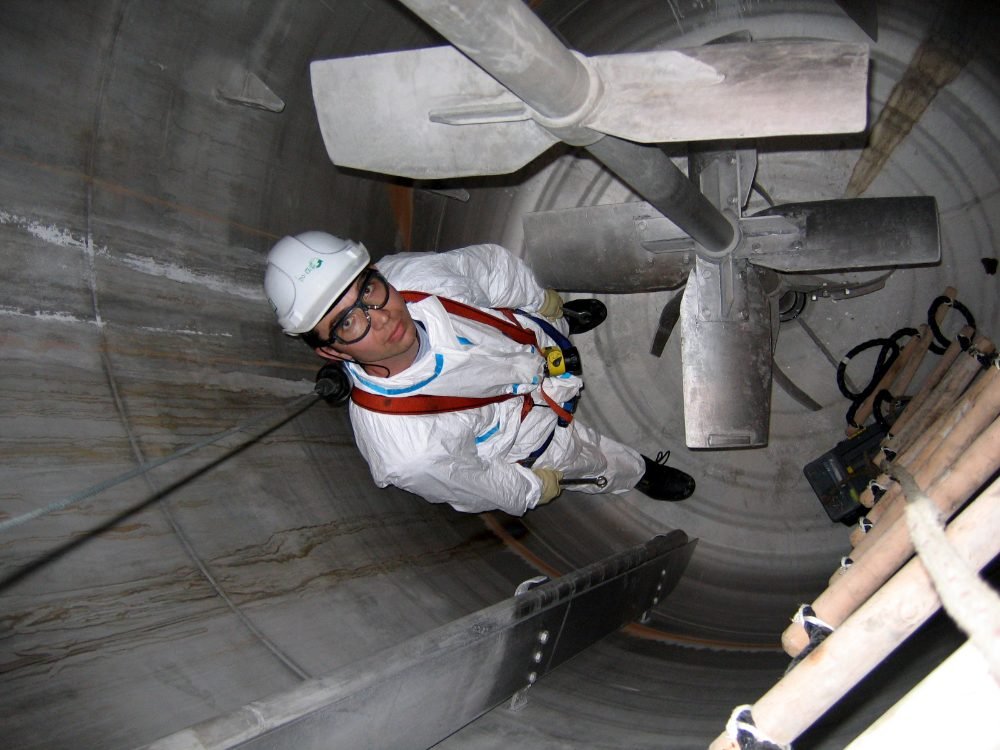
The hardware behind the perfectly-mixed assumption: impellers, baffles, the power characteristic and P/V scale-up.
Tube Reactors
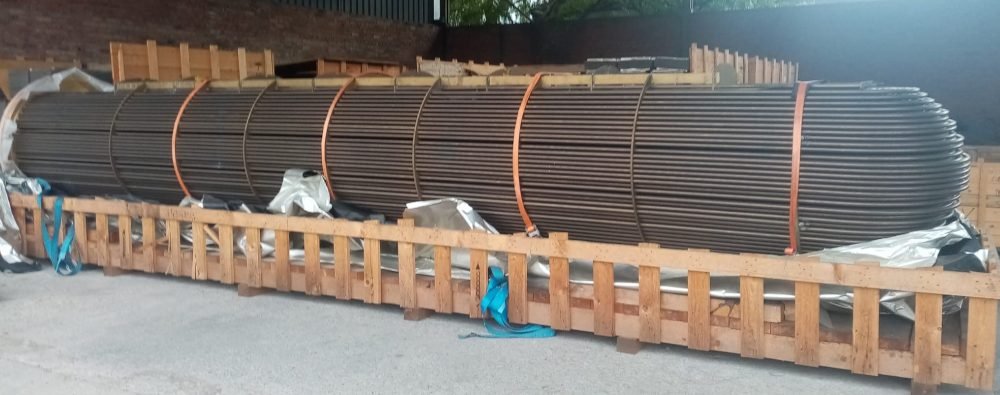
Plug flow and the differential mole balance, multitubular industrial forms, and why a PFR beats a CSTR for a positive-order rate.
Conversion
Conversion X, the four design equations rewritten in X, and the Levenspiel plot — the rectangle and the area under the curve.
Reactors in Series
Cascades, the staircase construction, N tanks approaching a PFR, and why the order of a mixed train matters.
Rate Laws
Order, elementary reactions, the units of k, half-lives, non-elementary and Langmuir–Hinshelwood forms, reversible rate laws.
The Arrhenius Equation
The energy barrier, the Arrhenius plot, the 10 K rule of thumb, and why extrapolation is dangerous.
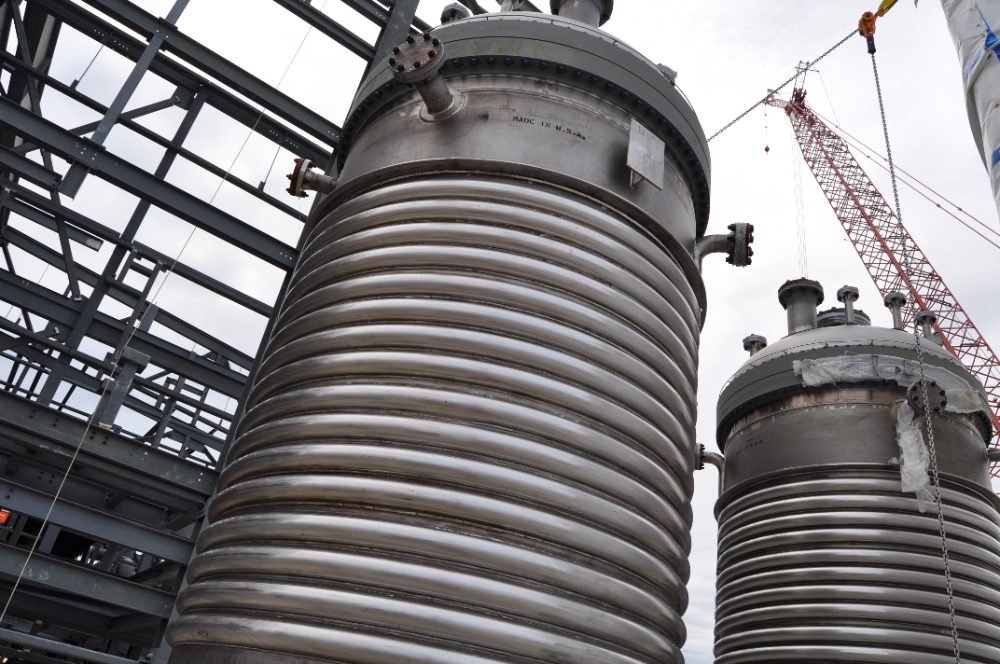
Isothermal Reactors
Stoichiometric tables, the feed ratio, the expansion factor, and every concentration written in terms of one variable.
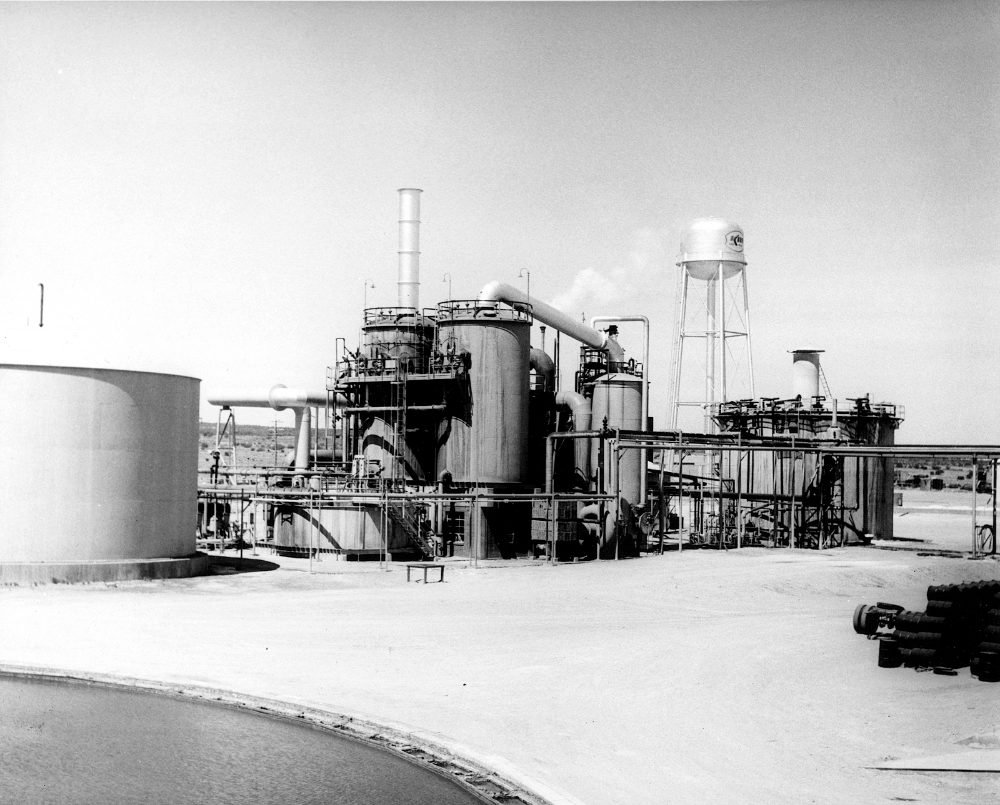
Isothermal Reactors — Examples
The design algorithm end to end: SO₂ oxidation, an LHHW packed bed, N₂O₄ dissociation and a laboratory-to-plant scale-up.
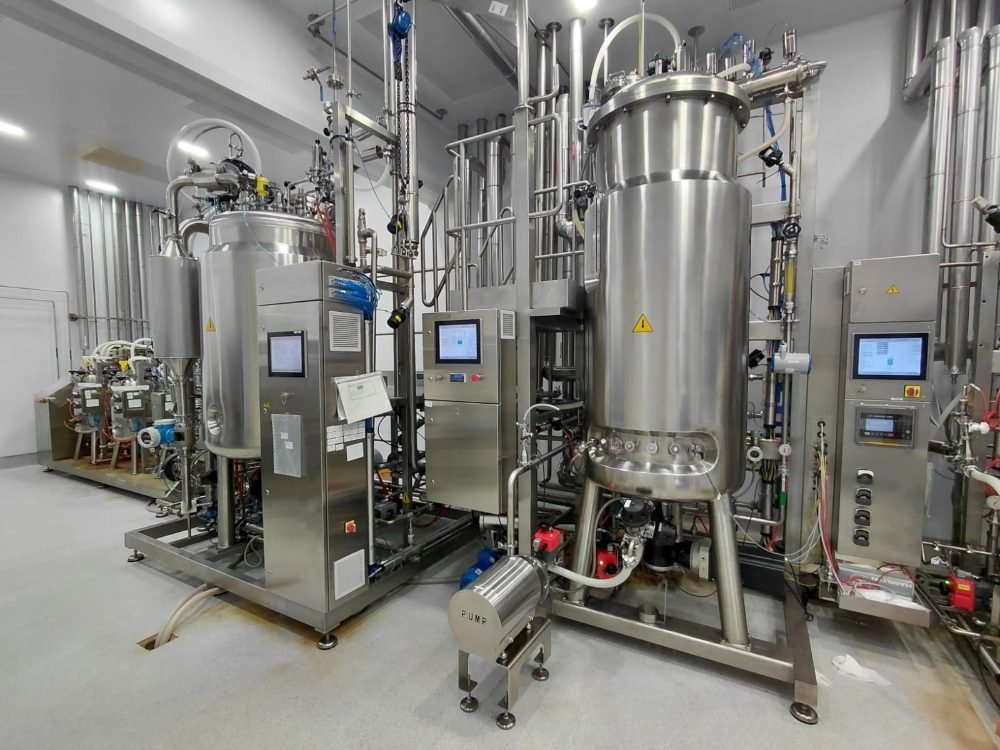
Batch Reaction Times
How long the vessel must be held, and the cycle time that decides how many batches a year the plant actually makes.
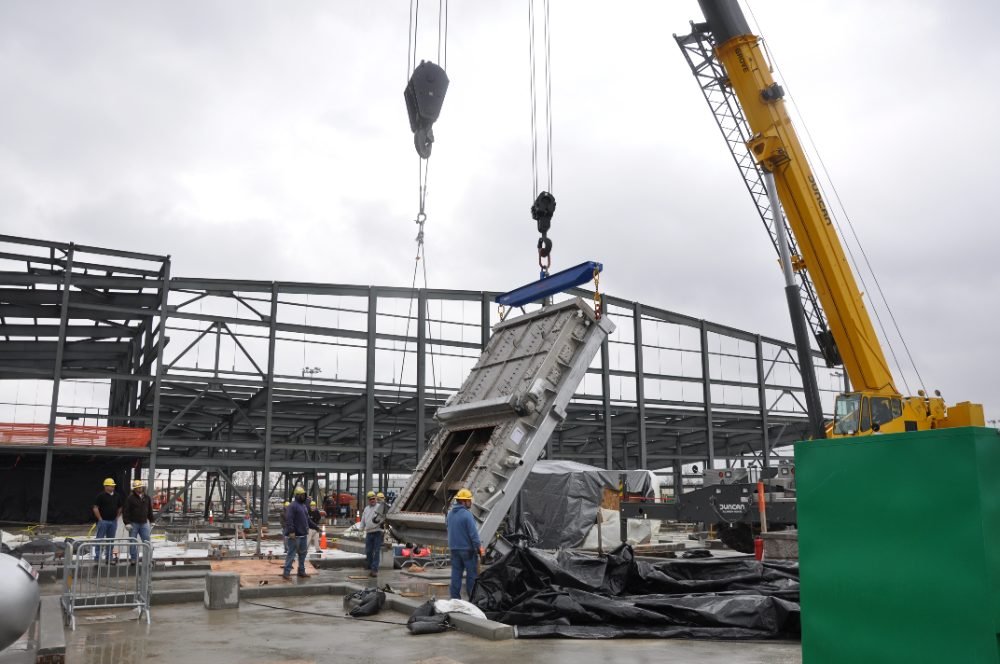
Damköhler Numbers
One dimensionless group that compares a laboratory reactor with a plant reactor, and conversion as a function of it.
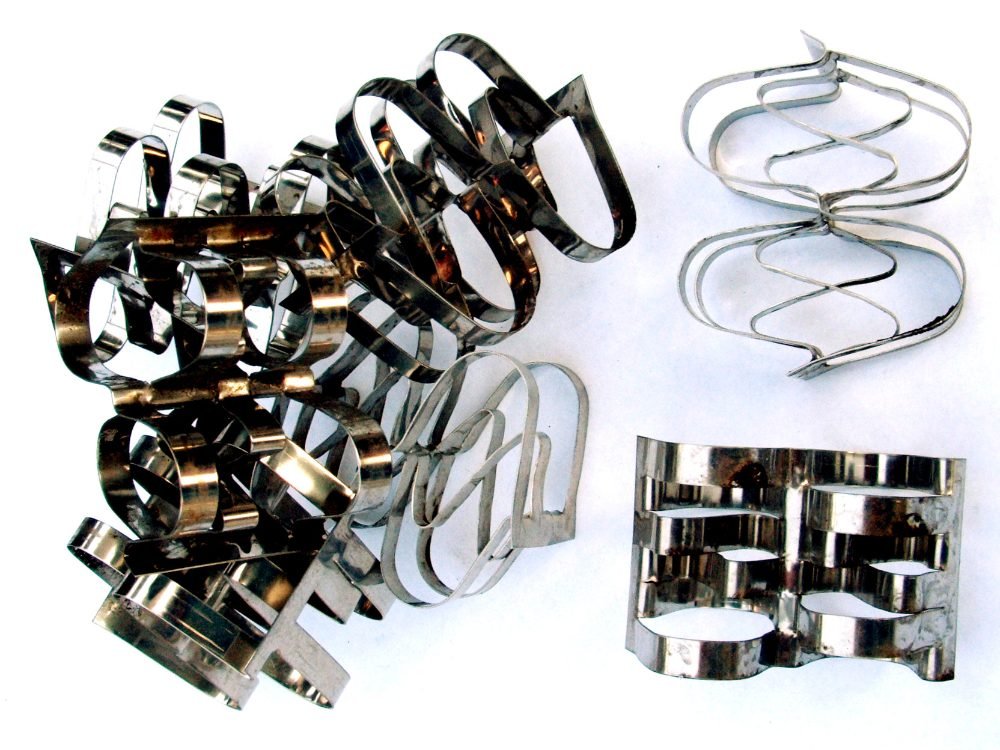
Pressure Drop
The Ergun equation, the coupled pressure–conversion system, and why a gas-phase packed bed punishes you twice.
Active Intermediates
Radicals, the pseudo-steady-state hypothesis, Lindemann fall-off, and chain reactions from initiation to termination.
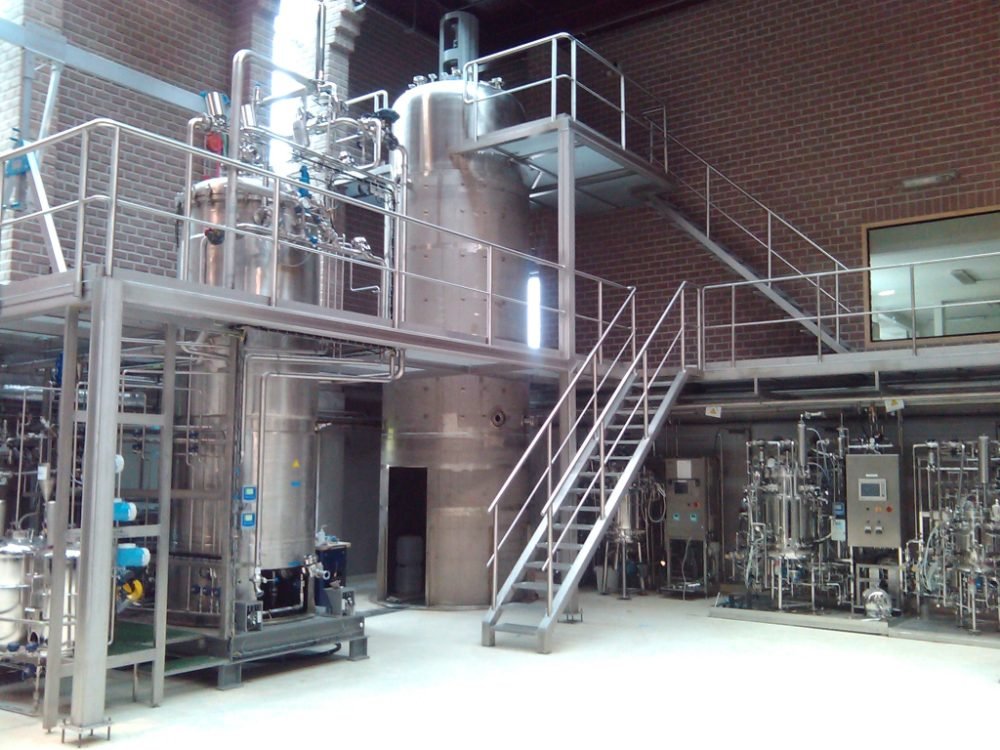
Enzymatic Reactions
Michaelis–Menten from the PSSH, the three inhibition types, and the chemostat with its washout limit.
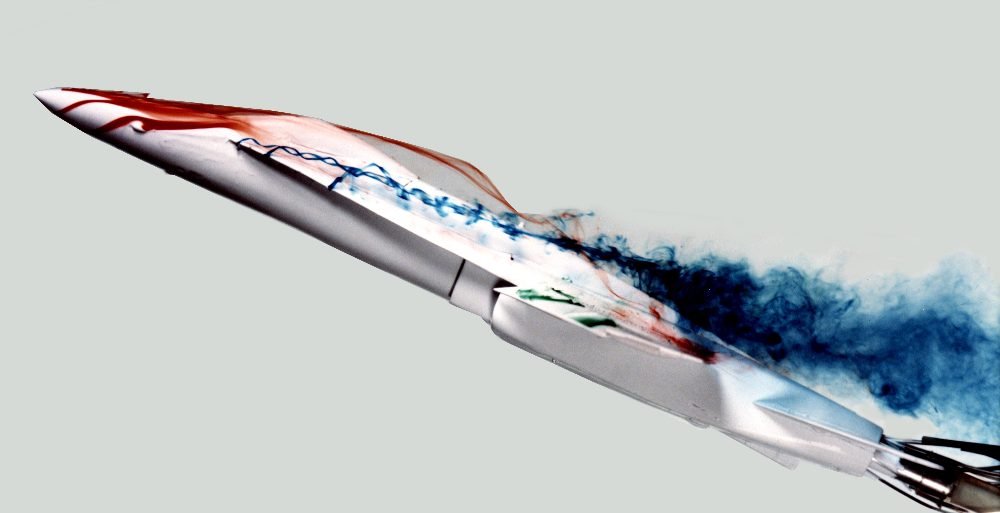
Residence Time Distribution
What a real reactor actually does: tracer experiments, E(t) and F(t), tanks in series, dispersion, conversion from an RTD.
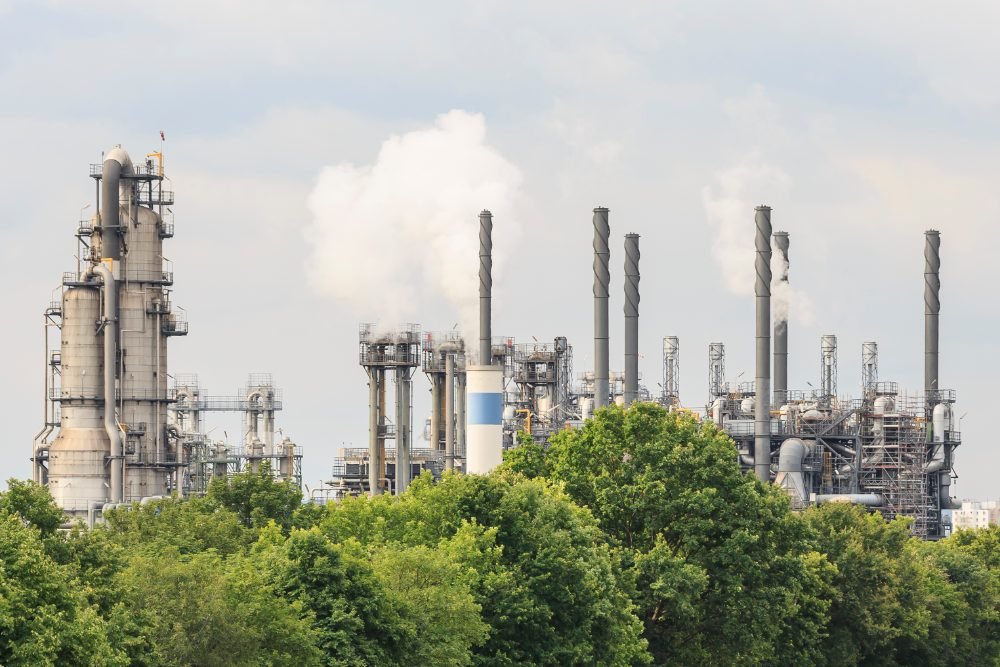
Multiple Reactions
Selectivity and yield: the concentration lever, the temperature lever, series reactions and the optimum quench time.
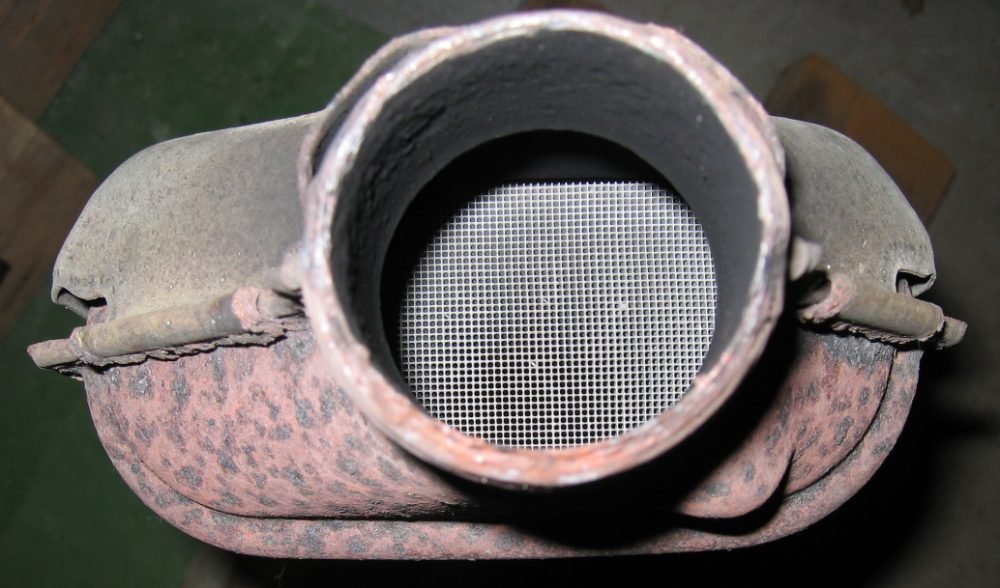
Catalysis
The seven steps at a catalyst pellet, Langmuir isotherms, LHHW rate laws, and deactivation by sintering, coking and poisoning.
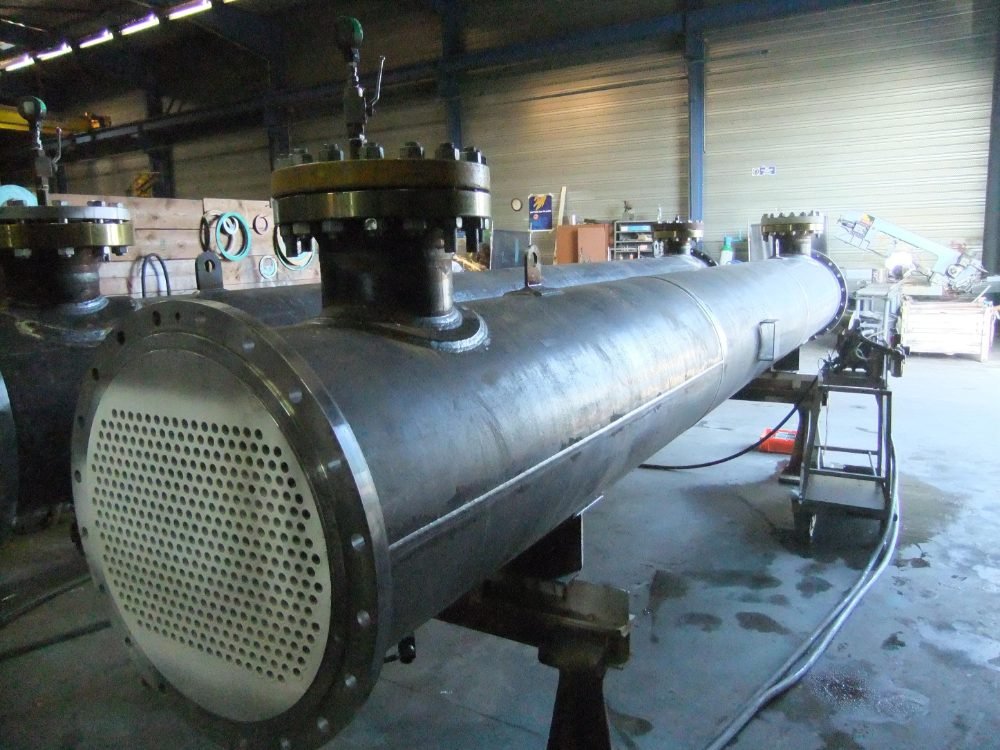
Nonisothermal Design
The energy balance joins the mole balance: adiabatic temperature rise, the X–T diagram, multi-bed converters with interstage cooling.
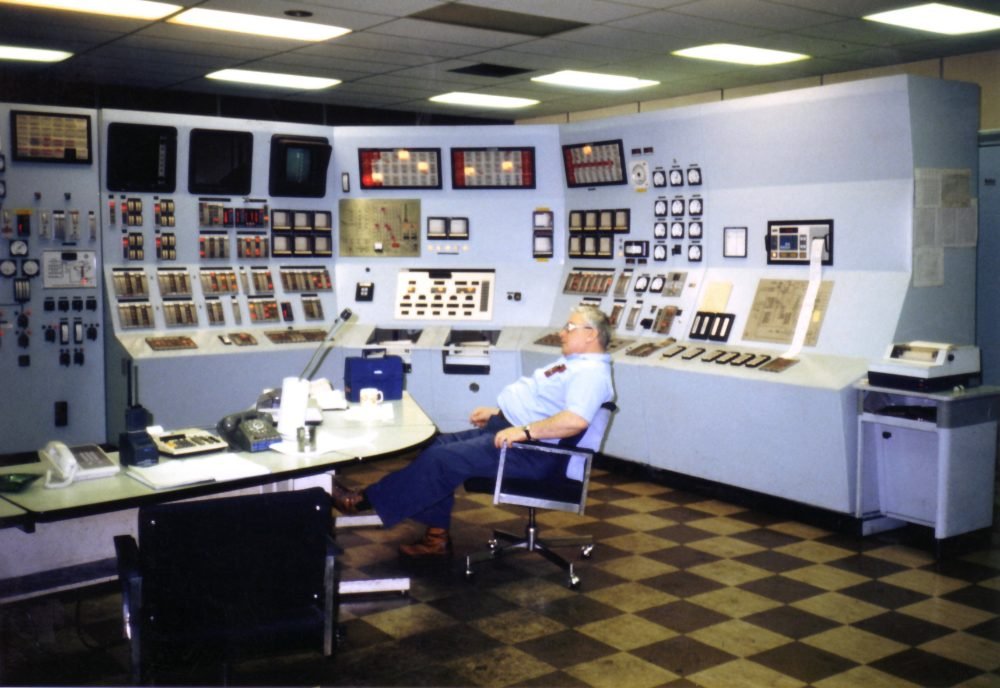
Unsteady-State Nonisothermal Design
Start-up transients, multiple steady states, and the ignition–extinction hysteresis a controller cannot fix.
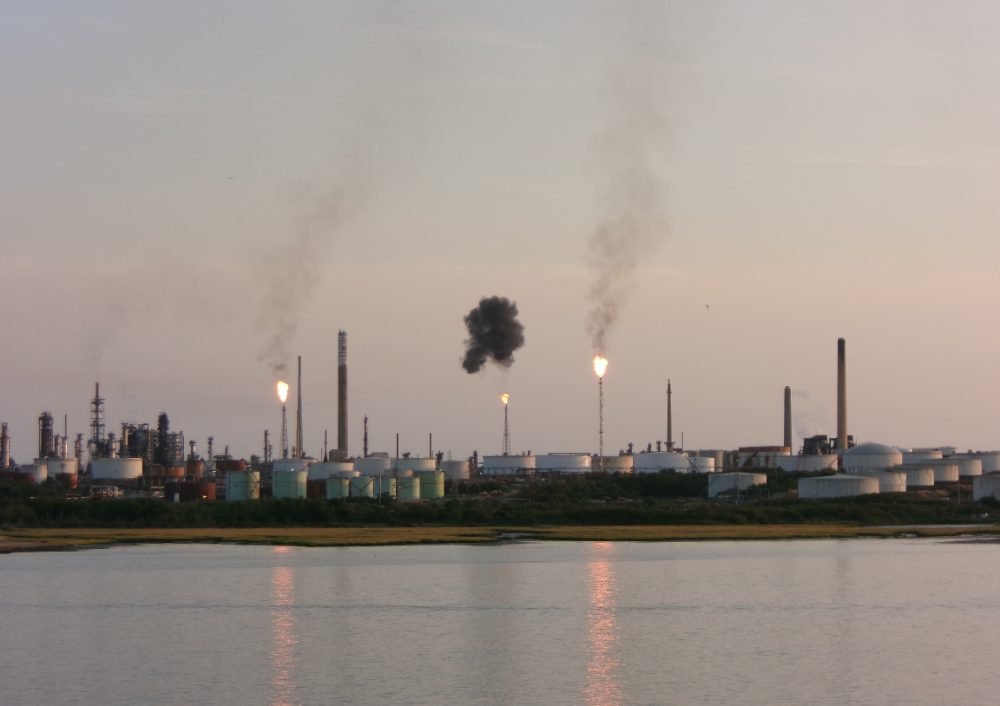
Reactor Safety
Runaway and the Semenov diagram, time to maximum rate, the layers of protection, and the accidents that taught the discipline.
Hydrometallurgy
Basics and technology. ← → to move, G glossary, T contents, F presentation.
You have marked 0 of 12 pages done.
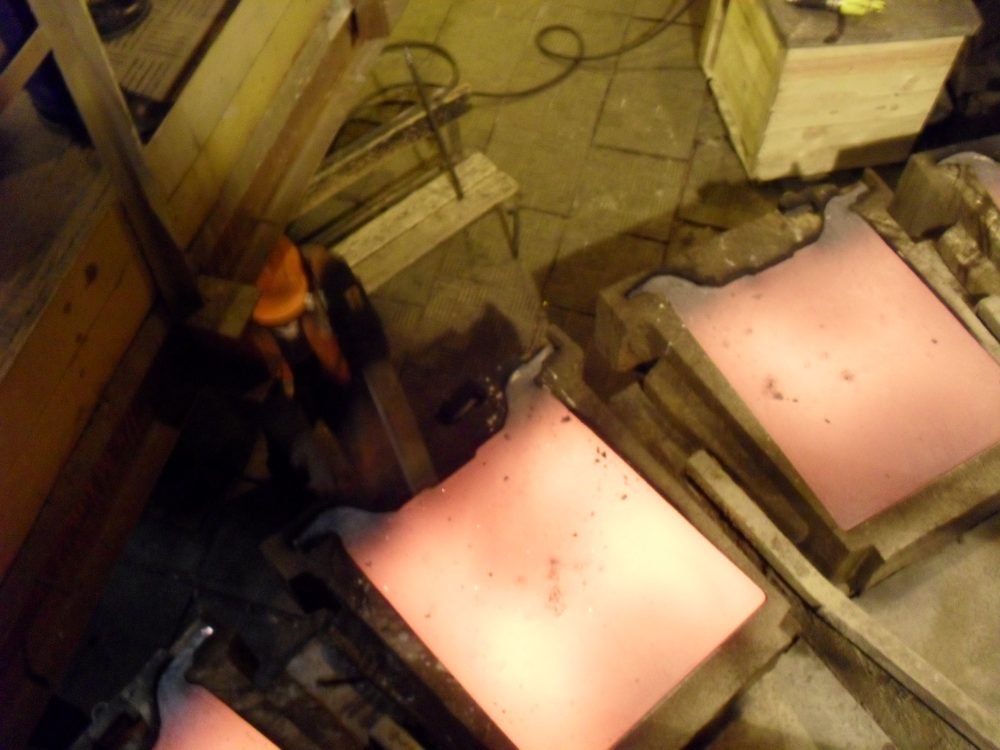
Introduction — Metallurgy & Hydrometallurgy
Why metals must be reduced, the deposit-to-product chain, pyro vs hydro, and a first tour of the SX–EW flowsheet.
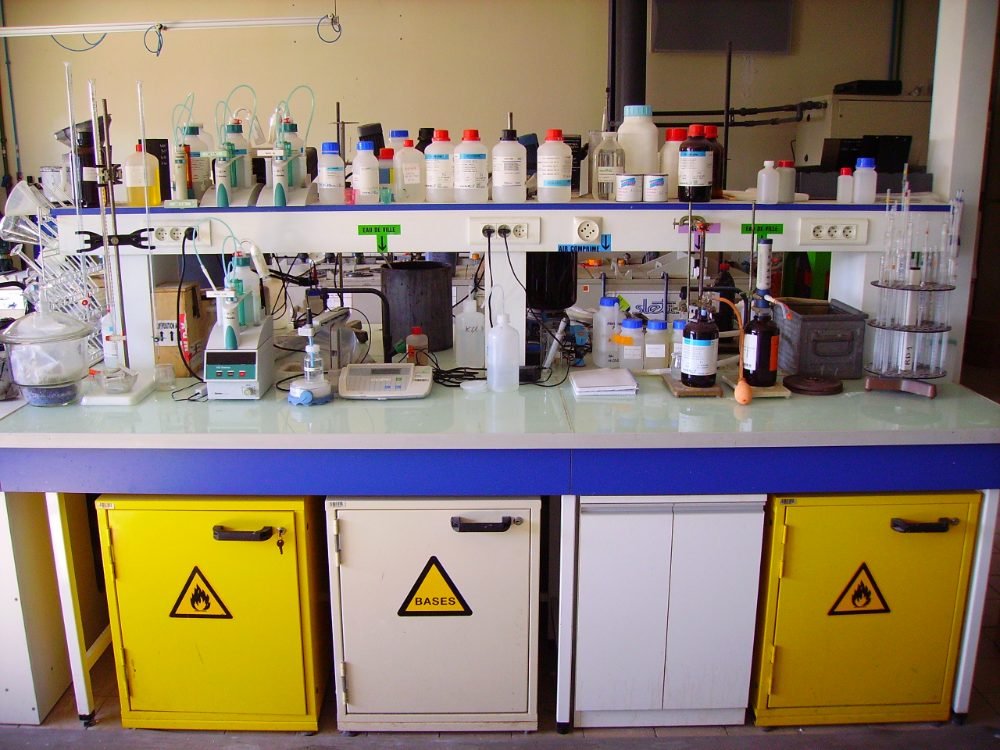
Thermodynamics & Kinetics
Will it leach, and how fast? Interactive Cu–H₂O Pourbaix diagram and the shrinking-core model, zone by zone.
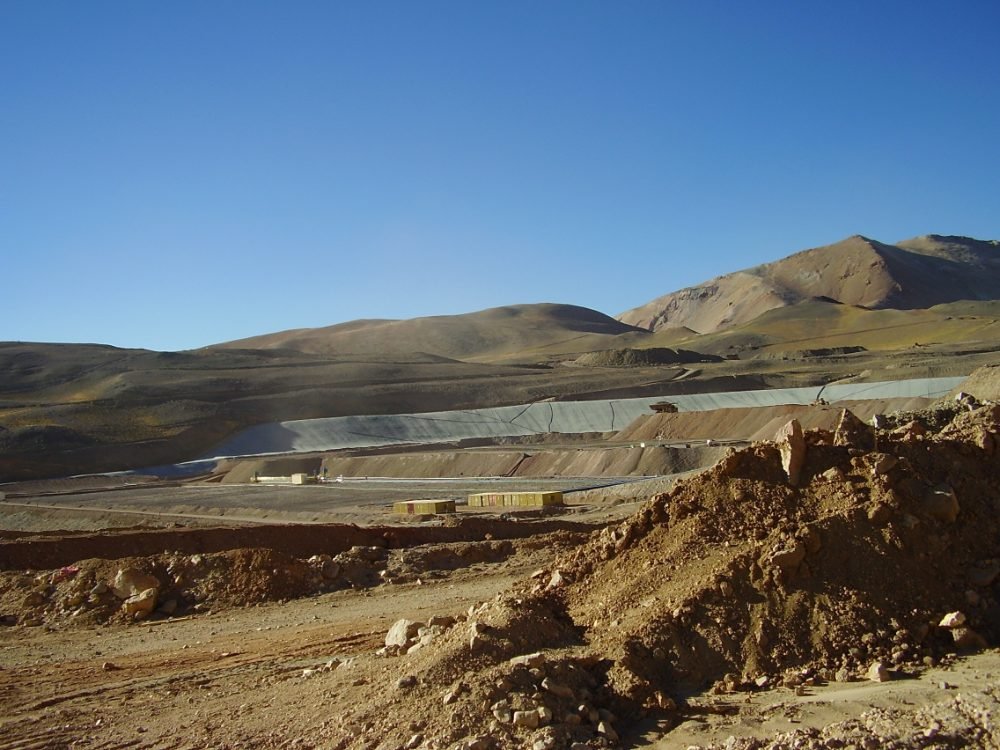
Leaching I & II
Five methods from wells to autoclaves — animated heap-leach pad, Pachuca and stirred tanks, and the pressure autoclave.
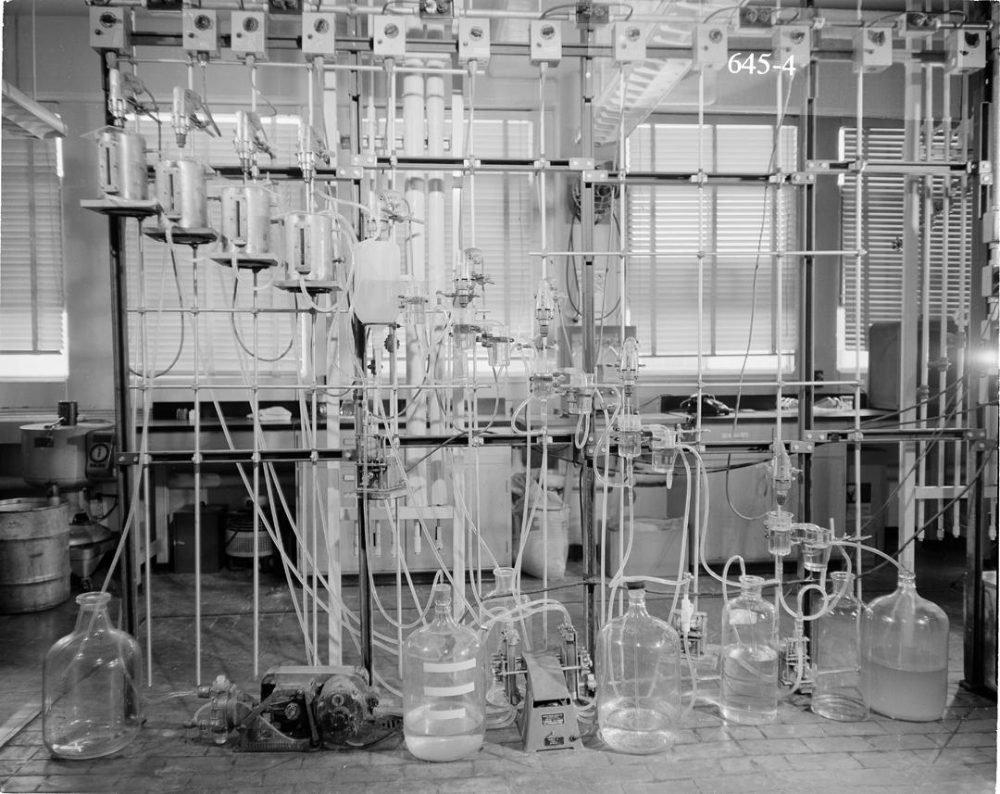
Solvent Extraction I & II
Extract, scrub, strip, wash — the animated mixer–settler, extractant chemistry and a visual McCabe–Thiele staircase.
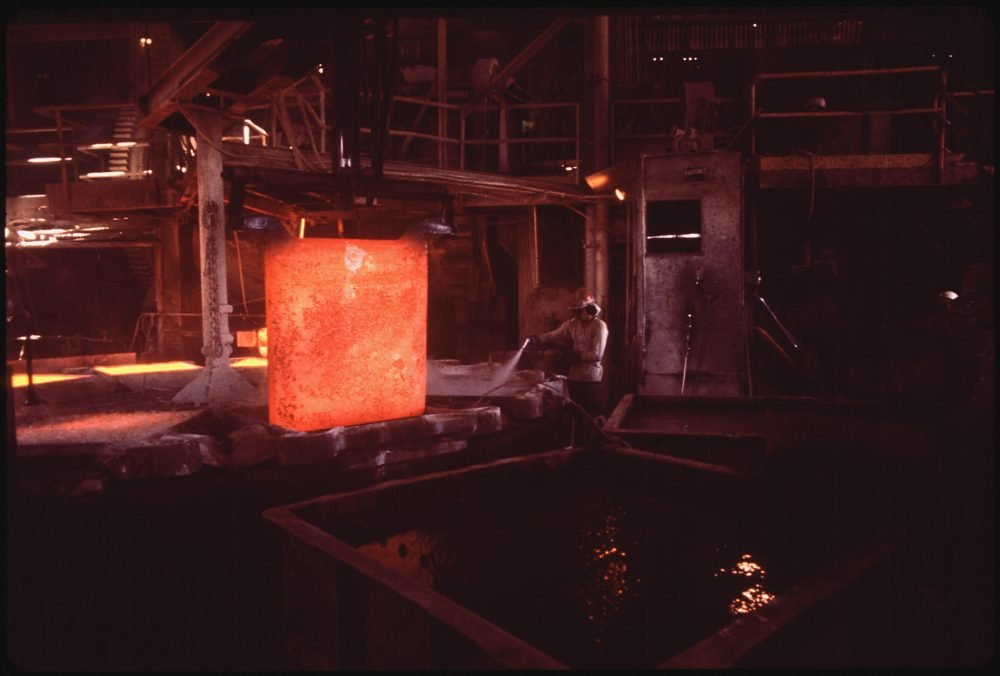
Electrolysis I & II
From EMF to the tankhouse: polarisation explorer, Faraday’s accounting, and winning vs refining side by side in one animated cell.
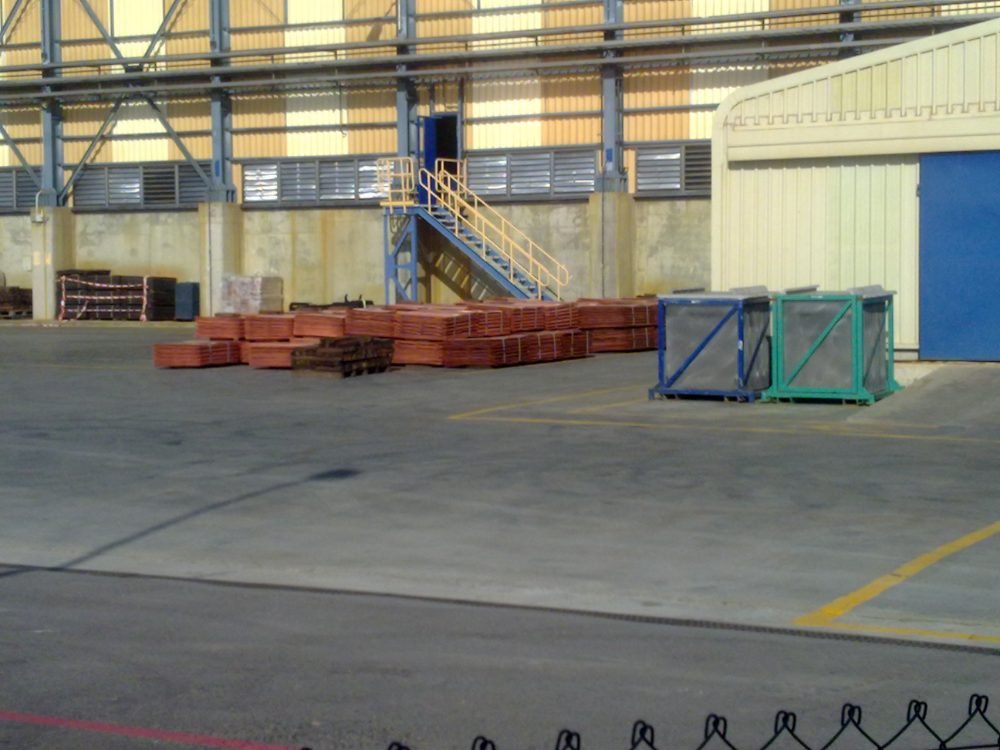
Copper Hydrometallurgy
Three mineral families, the ferric–ferrous engine, and a station-by-station tour of the full SX–EW plant.
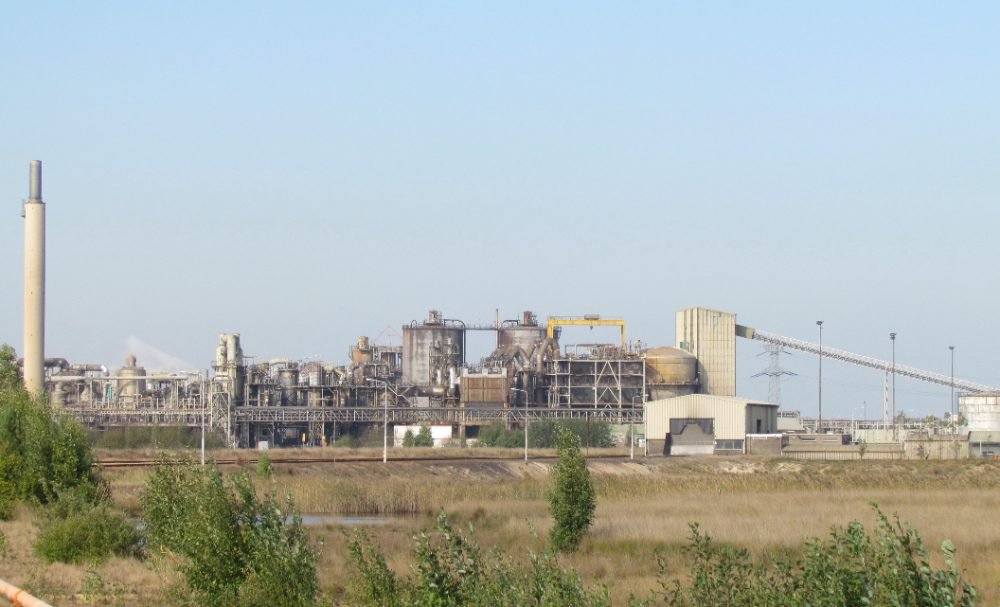
Zinc Hydrometallurgy
The RLE route: animated fluidised-bed roaster, iron’s gatekeeping, and the hydrogen-overvoltage miracle that makes Zn EW possible.
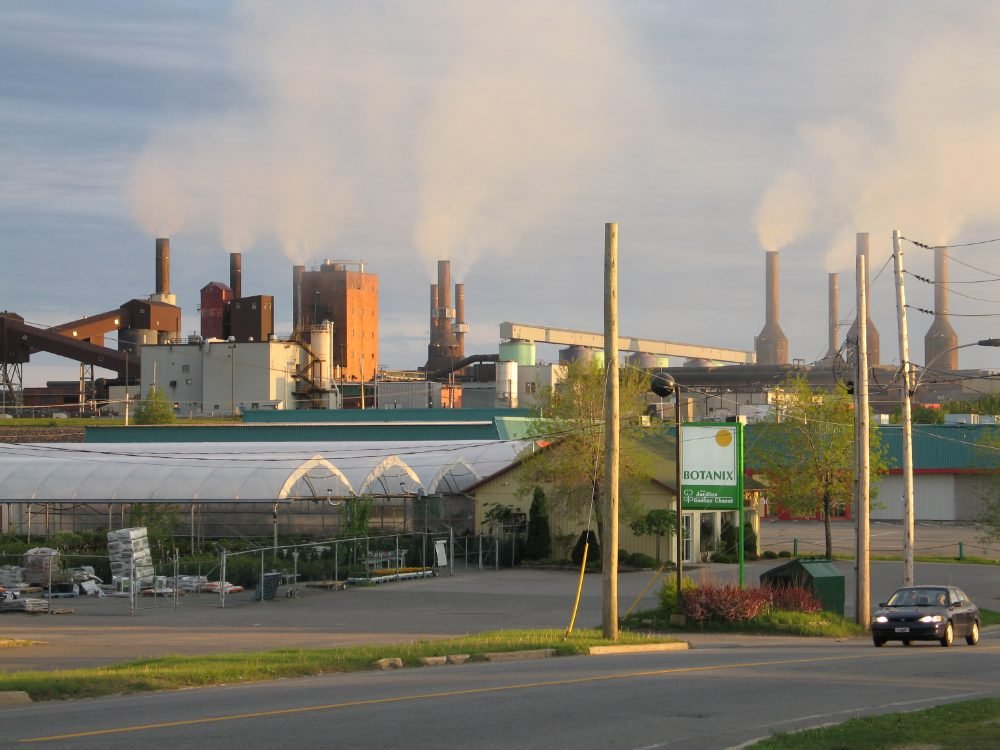
Aluminium
The Bayer NaOH merry-go-round and the Hall–Héroult cell — why water purifies aluminium but molten salt must reduce it.
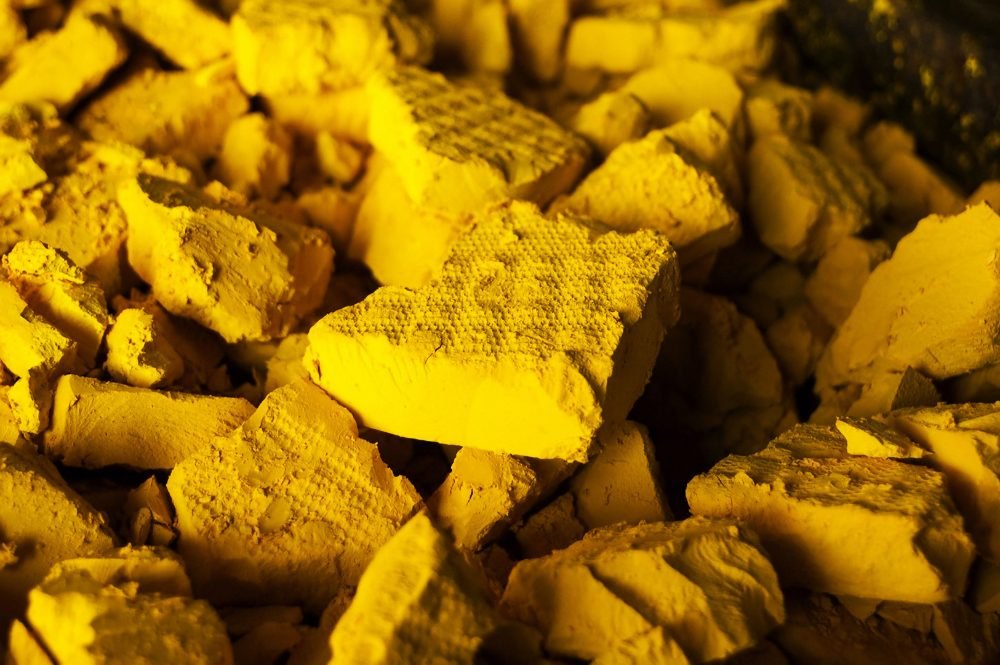
Uranium Hydrometallurgy
Acid vs carbonate chemistry and the ISR wellfield in cross-section — including Mongolia’s own Zuuvch-Ovoo project.
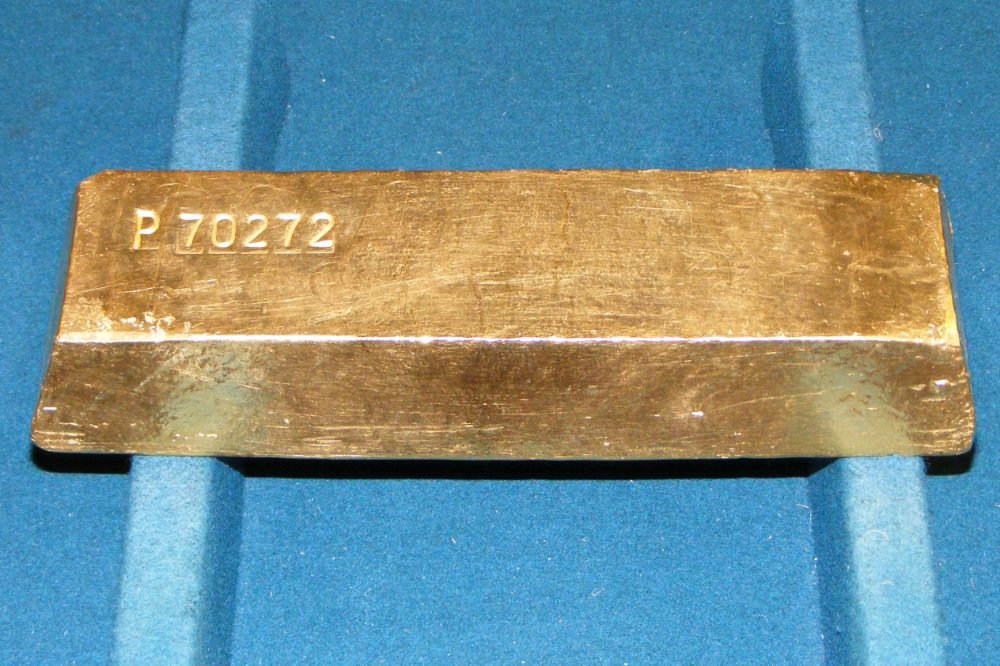
Gold Hydrometallurgy
Oxidant + ligand or nothing: Elsner’s equation, the animated CIP carbon train, refractory ores and the cyanide-free frontier.
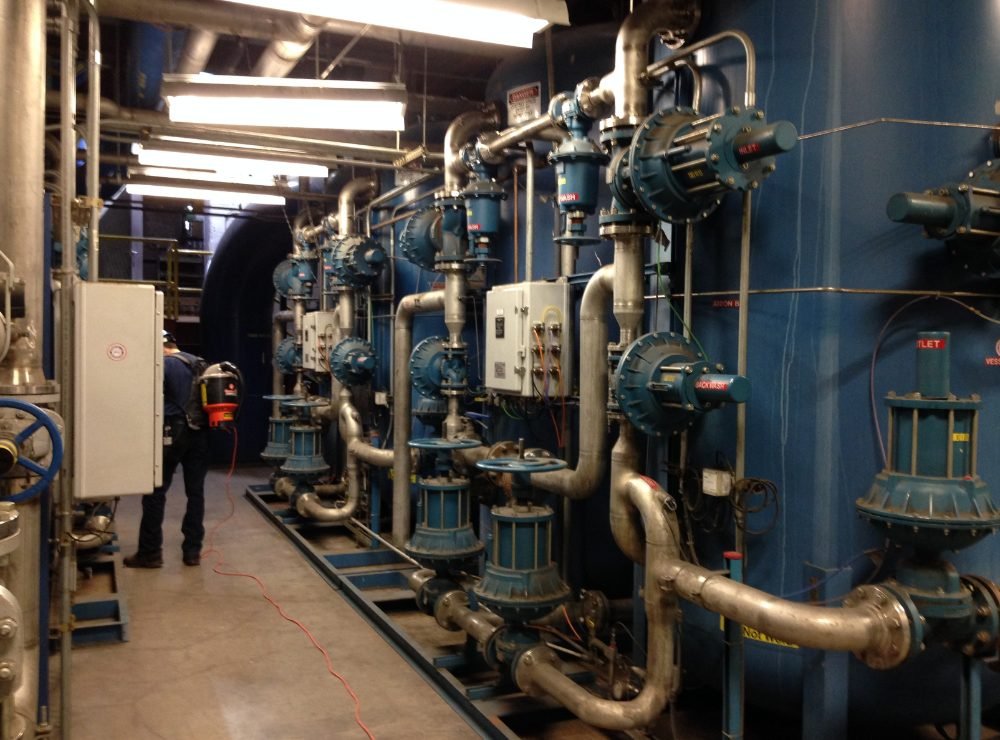
Ion Exchange · Carbon · Precipitation
Columns and breakthrough curves, activated carbon’s 3000 m²/g, and separations run with nothing but a pH dial.
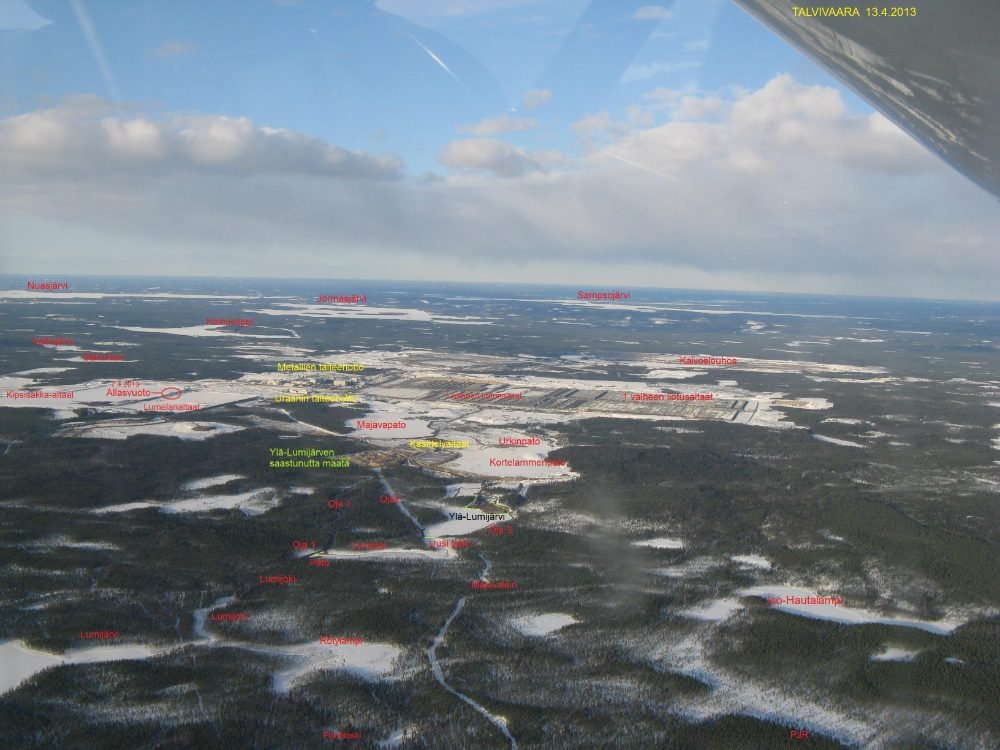
Biohydrometallurgy & Bioleaching
Microbes as metallurgists: contact vs non-contact mechanisms, thiosulfate vs polysulfide pathways, bio-heaps, BIOX — and biomining in orbit.
Fossil Fuel Technology
RMPE403 · coal, oil, gas and synthesis gas — course page. ← → to move, G glossary, T contents, F presentation.
You have marked 0 of 15 pages done.
Energy Demand and the Primary Energy System
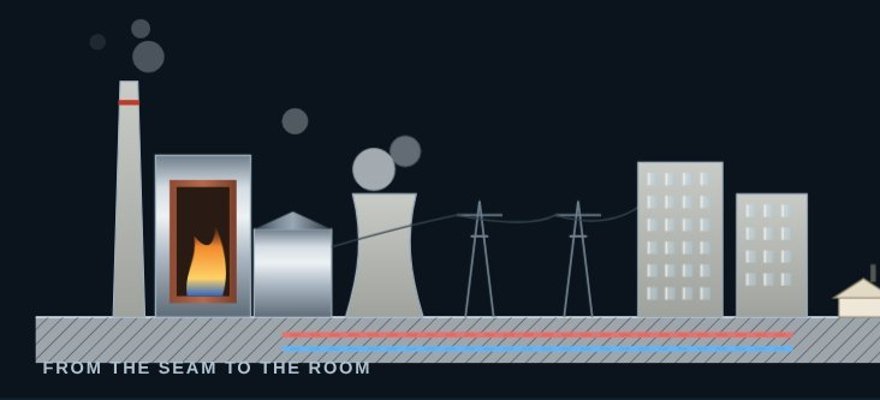
Every tonne of fuel begins as a demand for heat, power or motion — calculate the demand first.
Formation, Occurrence and Resources of Fossil Fuels
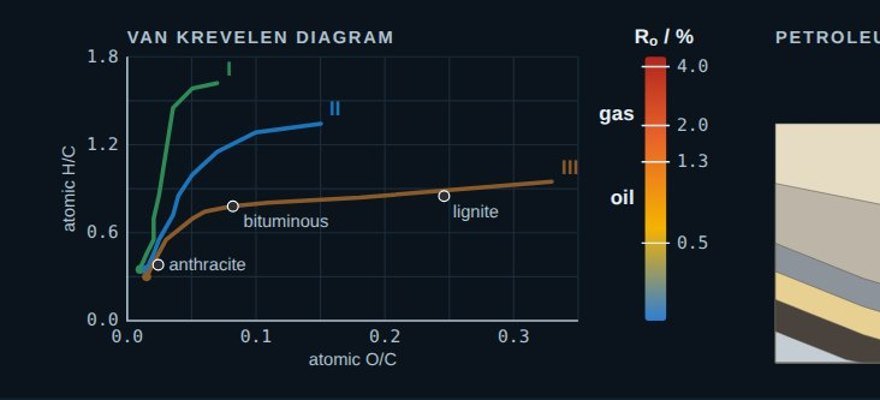
Every tonne of coal and every barrel of oil is buried sunlight that survived three filters: preservation, maturation and trapping.
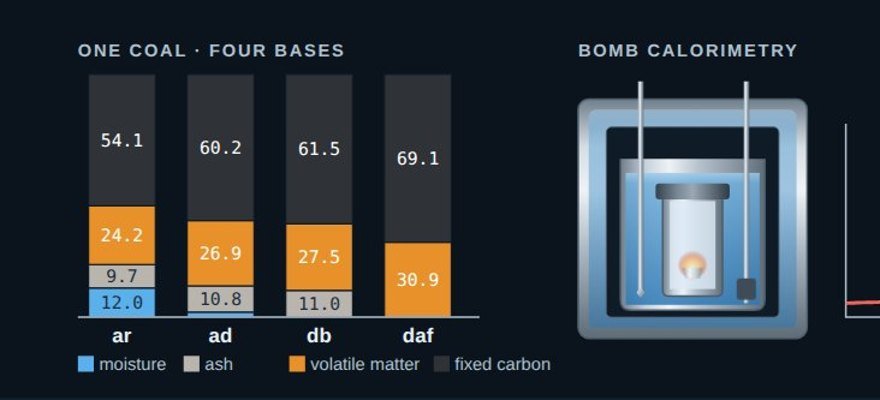
Solid Fuels: Classification and Characterisation
A coal is only as useful as the numbers on its certificate, and every one of those numbers depends on how it was measured and on which basis it is reported.
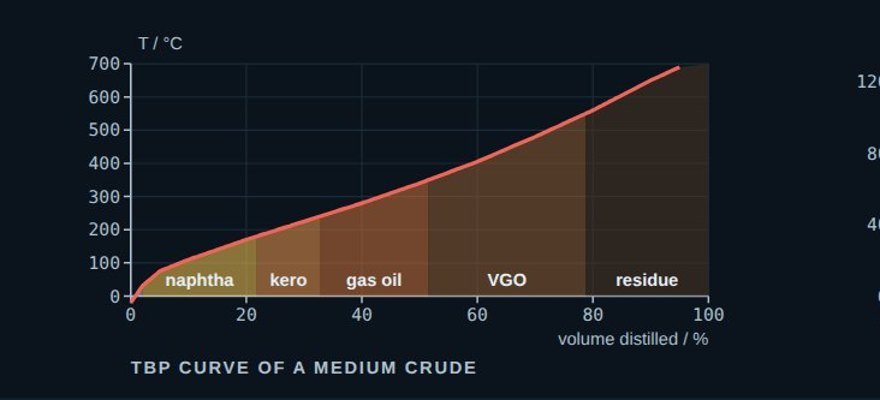
Liquid and Gaseous Fuels: Properties and Characterisation
A fuel is sold, refined and burned by its numbers: learn to measure them and to read what they control.
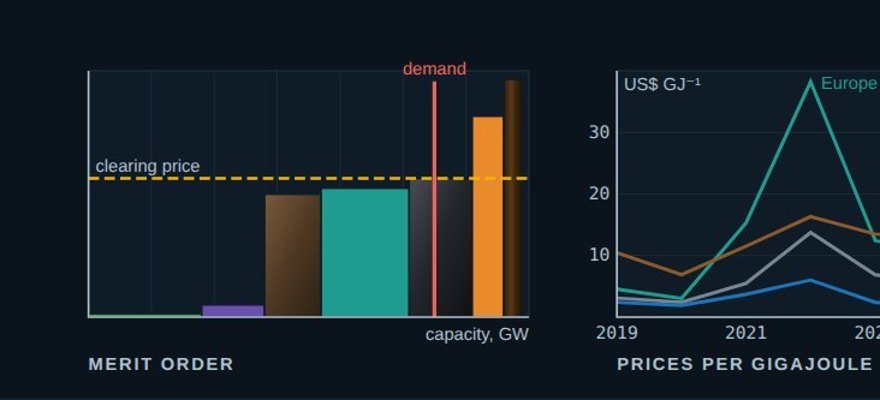
Energy Markets, Consumption and Prices
Every energy price is a marginal cost, a rent, or a bargain — and an engineer can compute all three.
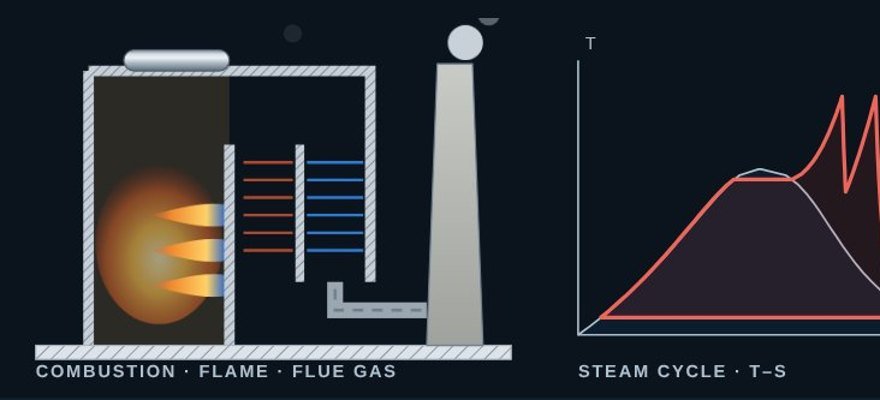
Thermodynamics of Fuel Conversion and Combustion
The oxygen you add decides whether a fuel burns, gasifies or pyrolyses, and thermodynamics tells you how far each can go.
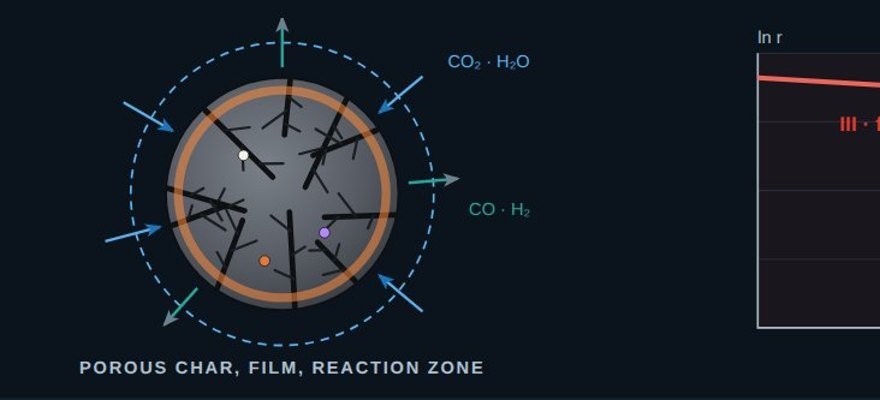
Kinetics of Solid Fuel Conversion
Equilibrium says where a coal particle ends up; rates, pores and films decide whether it gets there inside the reactor.
Pyrolysis, Carbonisation and Coking
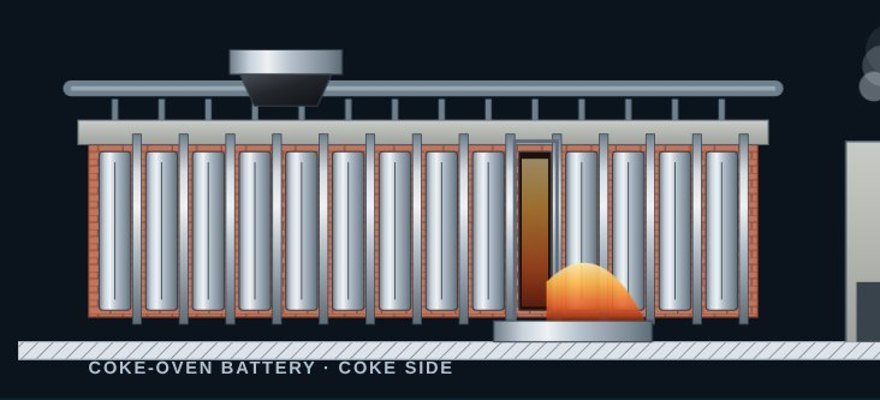
Heat without air turns coal, lignite and wood into char, tar and gas; the coke oven is the art of steering that split.
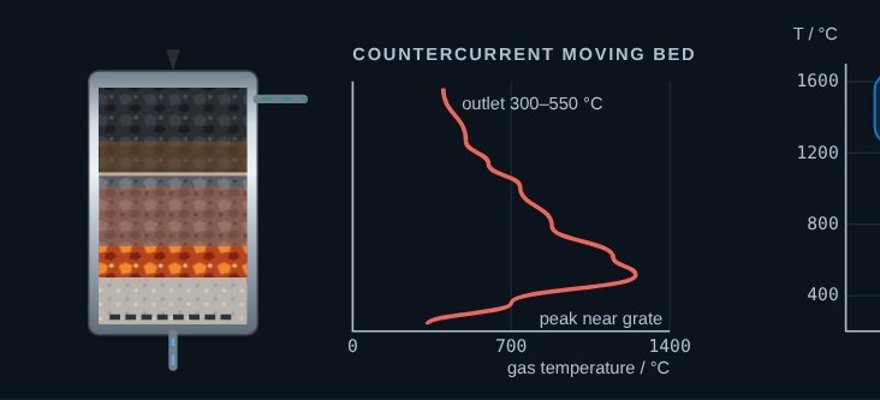
Gasification I: Principles and Fixed-Bed Gasifiers
A gasifier is a furnace that deliberately runs out of oxygen, and the fixed bed is the one that also recovers its own heat.
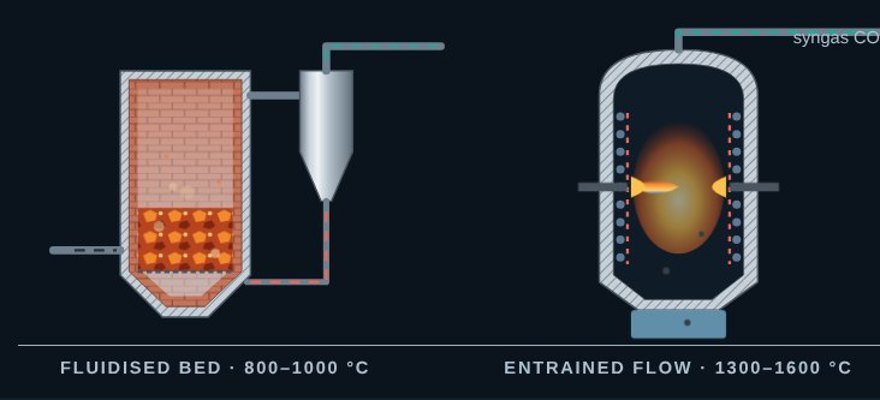
Gasification II: Fluidised-Bed and Entrained-Flow Gasifiers, IGCC
Particle size sets the residence time, the residence time sets the temperature, and the temperature decides what happens to the ash.
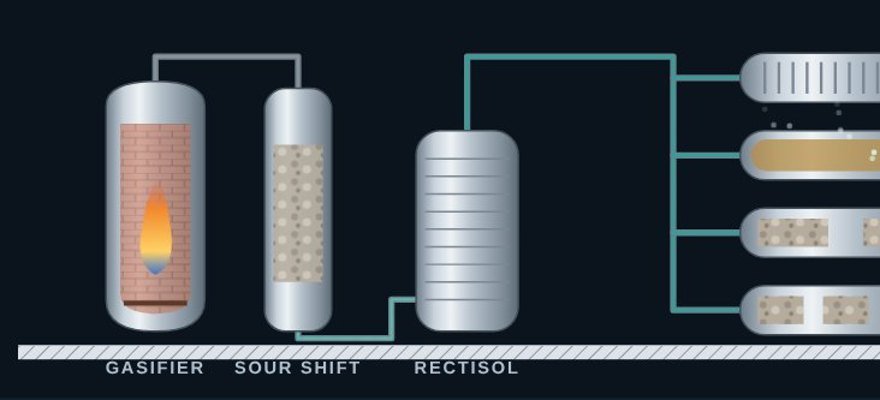
Synthesis Gas to Products: Conditioning, Methanol, Fischer–Tropsch, SNG, Ammonia
The gasifier makes a raw gas; everything valuable is decided by how that gas is cleaned, shifted and converted.
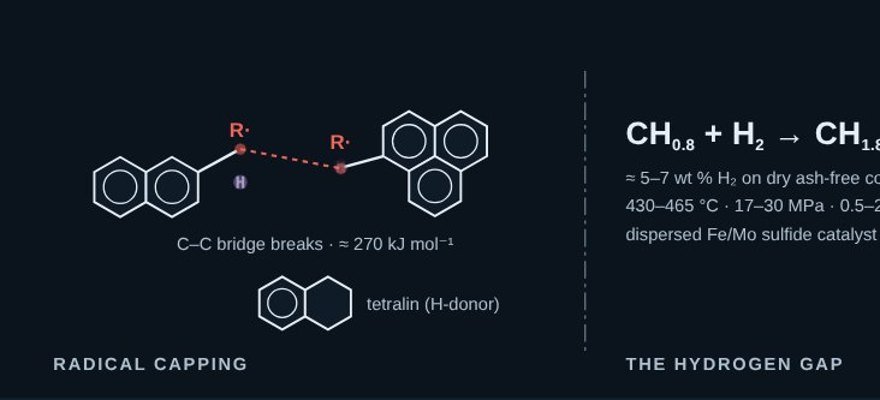
Coal Liquefaction and Hydrogenation
Coal is a hydrogen-deficient oil: liquefaction is the art of breaking it gently and paying for the hydrogen.
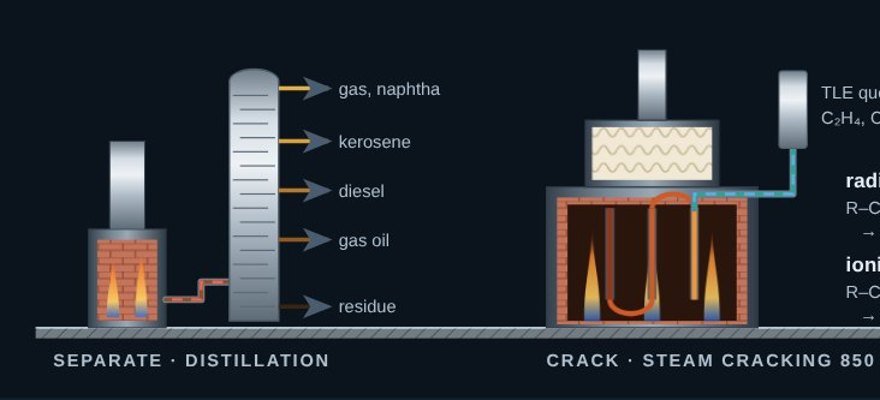
Cracking of Hydrocarbons and Petroleum Refining
A refinery is a machine for breaking the right bonds, in the right place, for exactly the right time.
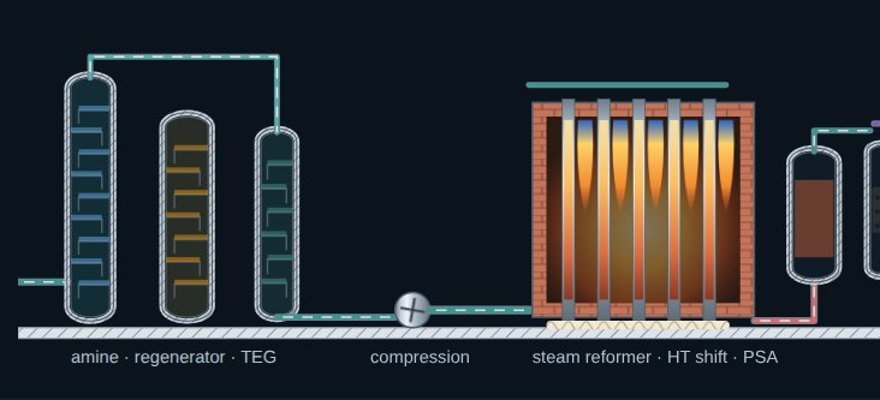
Natural Gas Processing and Hydrogen Production
The same molecule, CH₄, is either cleaned and sold as fuel or taken apart for its hydrogen; both are chemical engineering against an equilibrium.
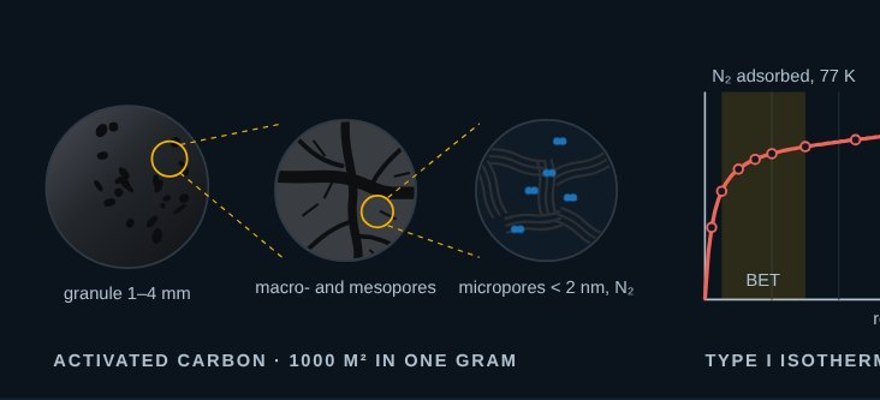
Carbon Materials, Emissions and the Future of Fossil Fuels
The carbon we do not burn, the emissions we must capture, and the whole course in one view.
Master & Doctor · Resources and Technology
Master & Doctor
Master class for the master programme, also open to doctoral candidates of the GMIT “Resources and Technology” PhD programme — research-led lectures built on real GMIT laboratory data.
Master class · PDRW 502
Process Design in Raw Material and E-waste Treatment — 321 slides, 3D equipment models, time-stepped simulations, a practice arcade in every lecture and a capstone plant-design project.
You have marked 0 of 10 lectures done.
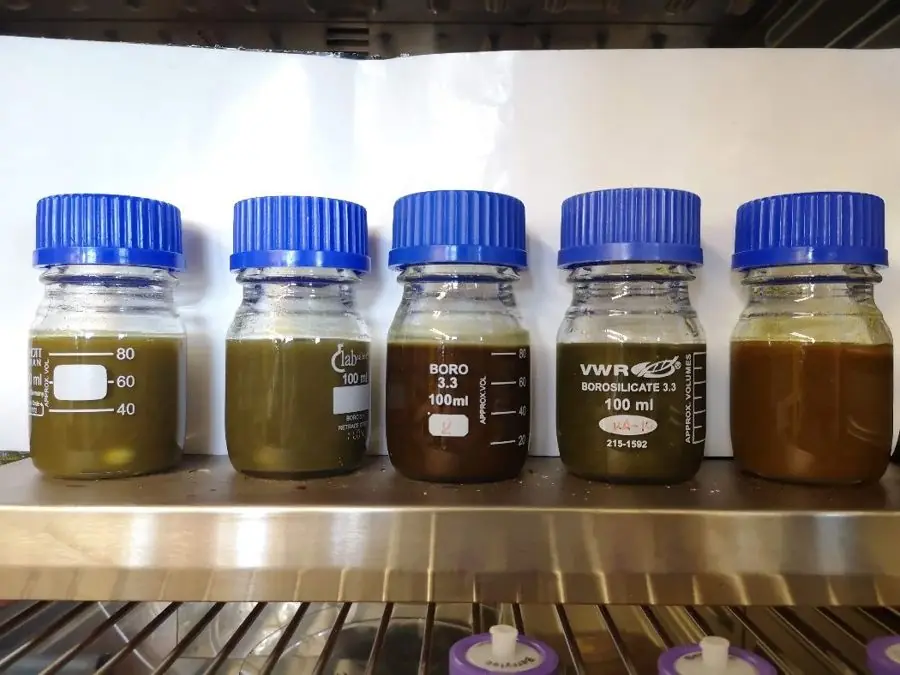
Ionometallurgy: leaching Cu–Au concentrates with halides in deep eutectic solvents
deep eutectic solvents, iodine-assisted leaching of chalcopyrite and gold, electrochemistry, residue analysis and an ionometallurgical flowsheet for Mongolian Cu–Au concentrates.
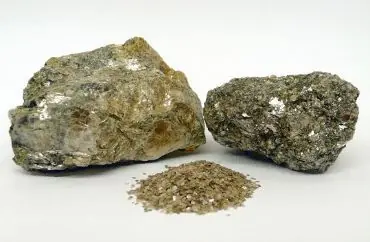
Lithium: raw materials, extraction and battery recycling
lithium brines and solar ponds, spodumene and zinnwaldite processing, the COOL CO2-leaching process, lithium-ion battery recycling routes, reagent and waste balances, climate footprint and the Mongolian perspective.
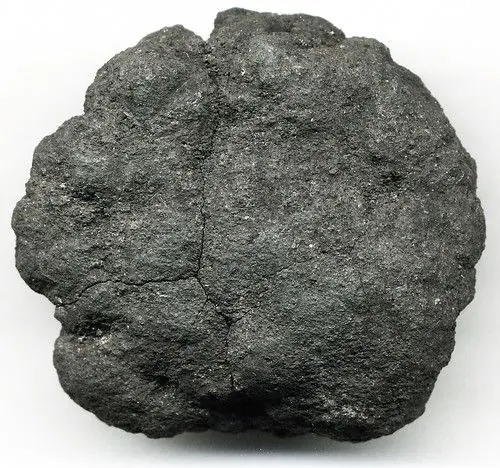
Deep-sea manganese nodules: leaching and solid-state chlorination
polymetallic nodules of the Clarion–Clipperton Zone, why MnO2 needs reductive leaching, NH4Cl solid-state chlorination in sublimation reactor and rotary kiln, Mn electrowinning and MnSO4·H2O for batteries, and the deep-sea mining debate.
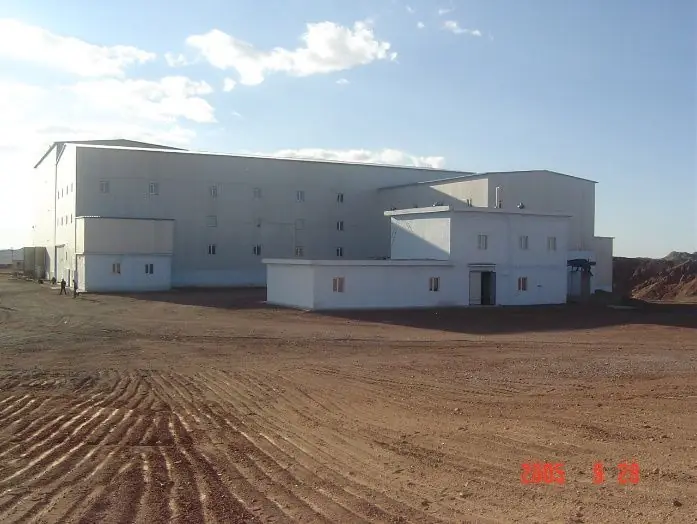
Designing a gold ore leaching plant in the South Gobi: from leach tests to flowsheet
the Olon-Ovoot case study — ore types, comminution, cyanide chemistry, bottle-roll and column tests, kinetic modelling, CIP/CIL, elution, electrowinning, smelting, cyanide detoxification and gold accounting for a 1800 t/d plant in the Gobi.
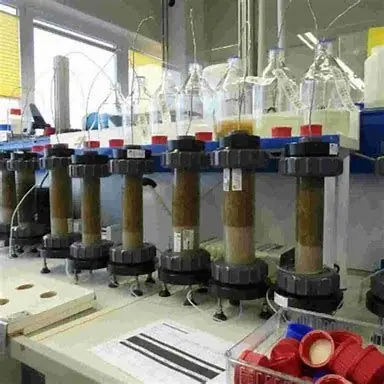
Feasibility studies and project development: from laboratory data to a bankable design
study levels and accuracy, Mongolian and international reporting rules, ore characterisation and back-calculation of ICP data, metallurgical balances, equipment sizing, CAPEX/OPEX estimation, NPV/IRR/payback with sensitivity, royalty, software and AI tools, and how to write the report.
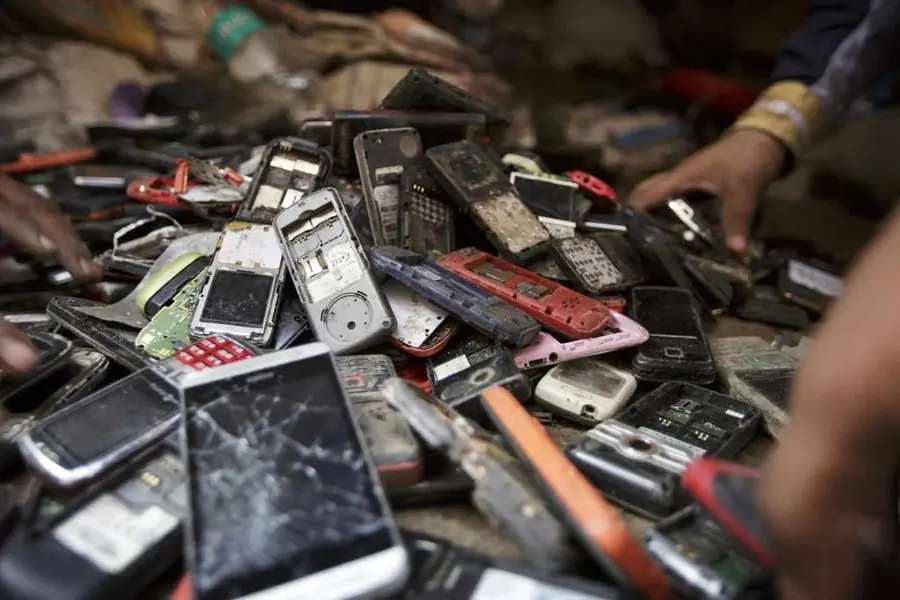
E-waste as a raw material: categories, composition, critical metals and the circular economy
WEEE definition and the six EU categories, material composition and hazardous substances, where precious and critical metals sit in devices, EU critical raw materials, recycling plants, circular economy, Basel Convention, EPR and the Mongolian situation.
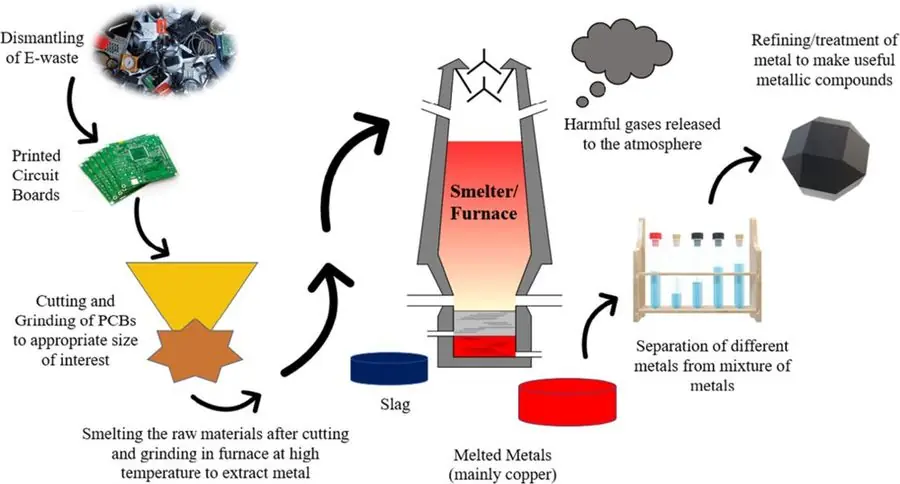
Urban mining of e-waste: physical and chemical processing routes
urban mining, dismantling, comminution, magnetic, eddy-current, density and electrostatic separation with their physics, pyrometallurgy in copper smelters, hydrometallurgical lixiviants, shrinking-core kinetics, bioleaching, nanometals and a Mongolian processing decision.
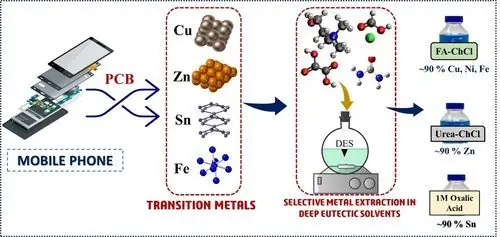
Electrochemically enhanced metal recovery from e-waste and ionic liquids
Faraday, Nernst and mass transfer for electrowinning; copper, gold, silver and neodymium recovery from e-waste; slurry and electrogenerative cells; ionic liquids and deep eutectic solvents for electrodeposition.
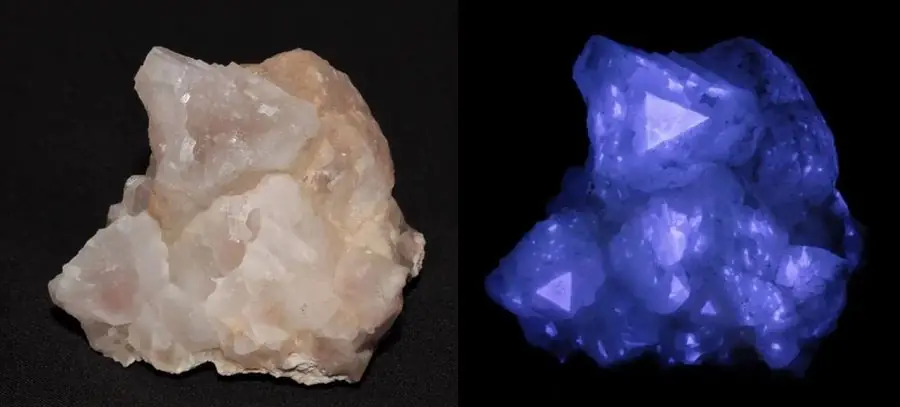
Advances in mineral identification and mineral synthesis
UV fluorescence, ED-XRF, MLA/QEMSCAN automated mineralogy, XRD with phase-identification game, Raman, hyperspectral imaging, handheld XRF/LIBS, machine learning and the synthesis of minerals.
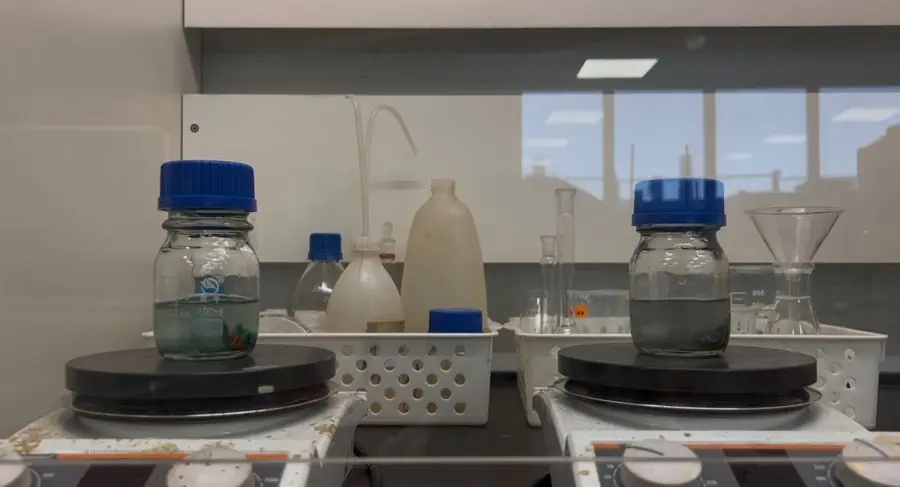
Design project: an e-waste processing plant for Mongolia
Capstone design studio: market, feed definition, flowsheet, mass balance, lab results, equipment sizing, CAPEX/OPEX, NPV and risk for a pre-feasibility PCB/e-waste plant in Mongolia, built on the previous cohort's project report.
Further Training · GMIT · GIZ · Мэдлэгийн төв
Further Training
Эрдэс боловсруулалтын шинэ технологиуд ба судалгааны арга зүй — a 3-day (18 h) professional course for mineral-processing, mining and laboratory engineers, plus a one-day hydrometallurgy course. In Mongolian with English technical terms.
GMIT further training
Мэргэжил дээшлүүлэх сургалт — three one-day modules, a one-day hydrometallurgy course and a 30-minute demo for companies. Nine simulators, calculators, exercises, tests and lab sheets built in.
You have marked 0 of 5 decks done.
Модуль 1 · Орчин үеийн хандлага
Modern trends — critical minerals (Li, Rb, F, REE), low-carbon technology, chemicals management and HSE. Day 1 · 6 h.
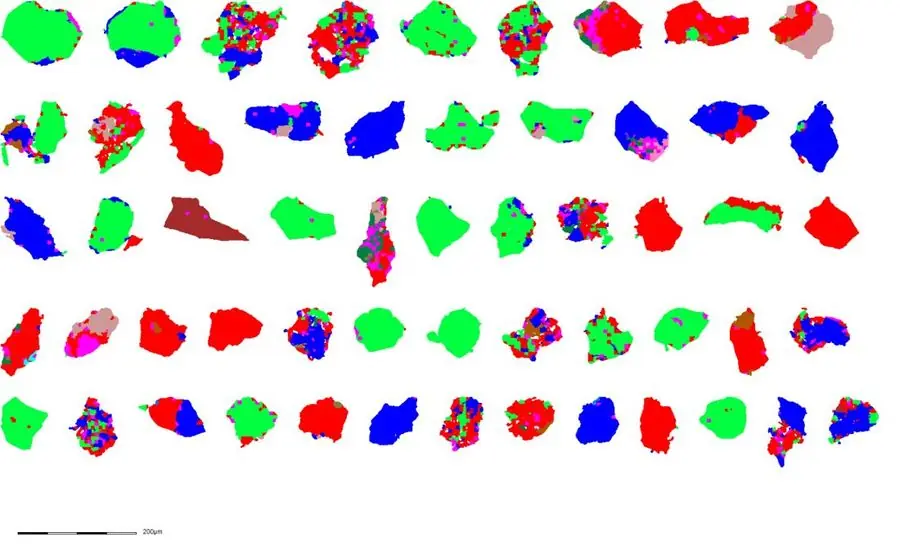
Модуль 2 · Технологийн туршлага ба багаж
Plant cases from feasibility to operation — gold (Bayankhongor), lithium (Övör) — with MLA-SEM, XRF and XRD and two lab sessions. Day 2 · 7 h.
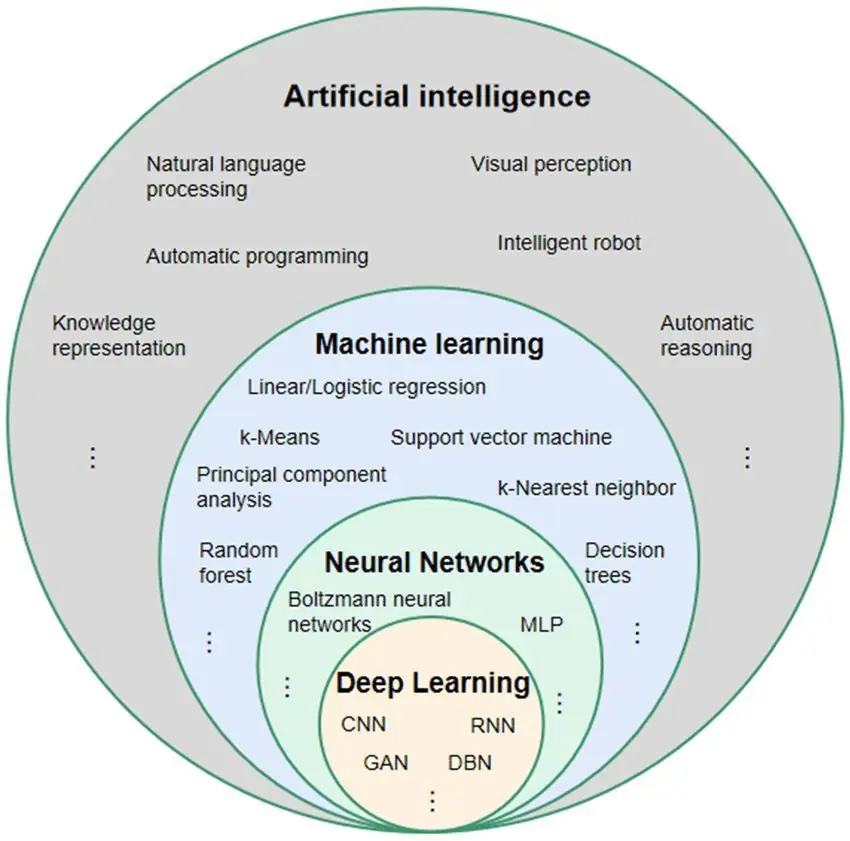
Модуль 3 · Дижитал шилжилт ба судалгаа
AI, machine learning and predictive maintenance (three in-browser demos), publishing in Scopus/WoS journals and the final test. Day 3 · 5 h.
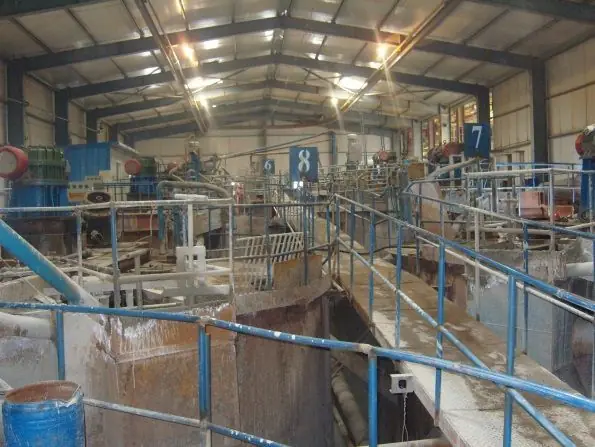
Гидрометаллурги: уусгалтаас катод хүртэл
One-day hydrometallurgy course for plant engineers: Eh–pH and kinetics, gold, copper (SX-EW, chalcopyrite), Li, U, CaF₂, REE and a lab session. 1 day · 6 h.
Демо: танилцуулга + жишээ хичээл
30-minute presentation for companies and committees: the programme at a glance, GMIT lab, simulators, team and fees, plus a 15-minute sample lesson.
Interactive simulators
A crushing and grinding circuit from run-of-mine rock to a flotation feed, the leaching and electrochemistry that follow it, the automated mineralogy that measures what comes out of all of it, and a complete hydrogen-fluoride plant run from its flow diagram, and the fuel-conversion tools of Fossil Fuel Technology — coal analysis, combustion, gasification, syngas synthesis, coking and crude distillation. Nothing to install — change a number and the whole calculation redoes itself in front of you.
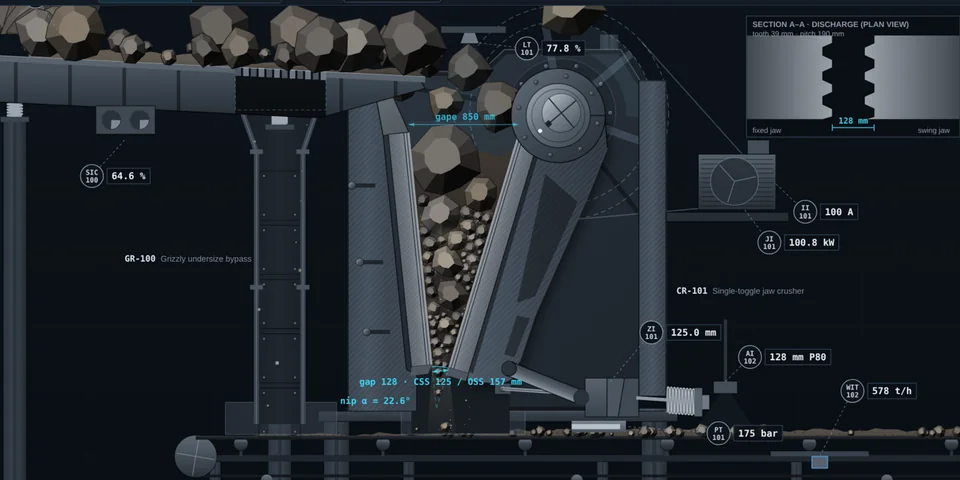 CR-101 · Primary crushing
Jaw Crusher CR-101 — Primary Crushing Station
A primary crushing station on an operator HMI: apron feeder, grizzly, jaw chamber and discharge conveyor, with the Whiten crusher model, Bond power draw, a chamber-level PI loop, liner wear and tramp-metal faults.
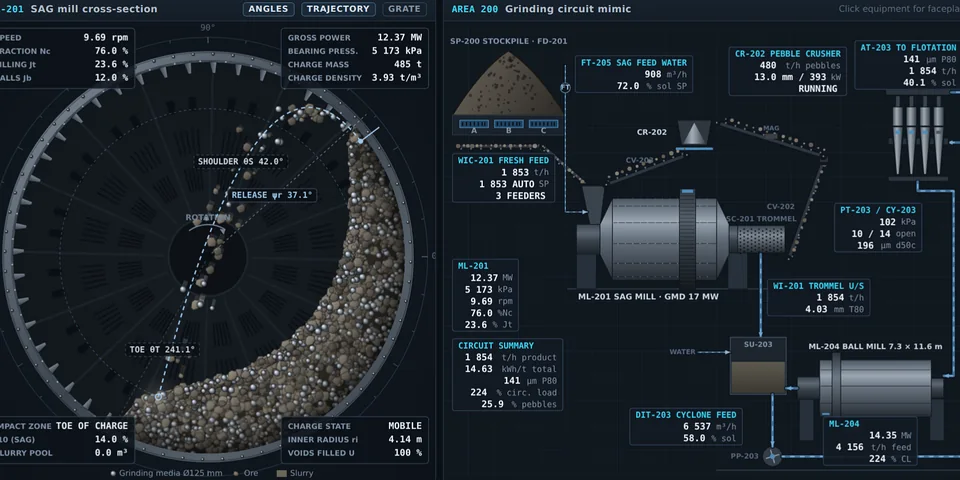 ML-201 · SABC circuit
SAG Mill ML-201 — SABC Grinding Circuit
A SAG–ball mill–pebble crusher circuit with cyclones, run from an operator HMI: Morrell power model, Whiten population balance, Plitt cyclone model and a bearing-pressure controller, with hard-ore, worn-liner and overload scenarios.
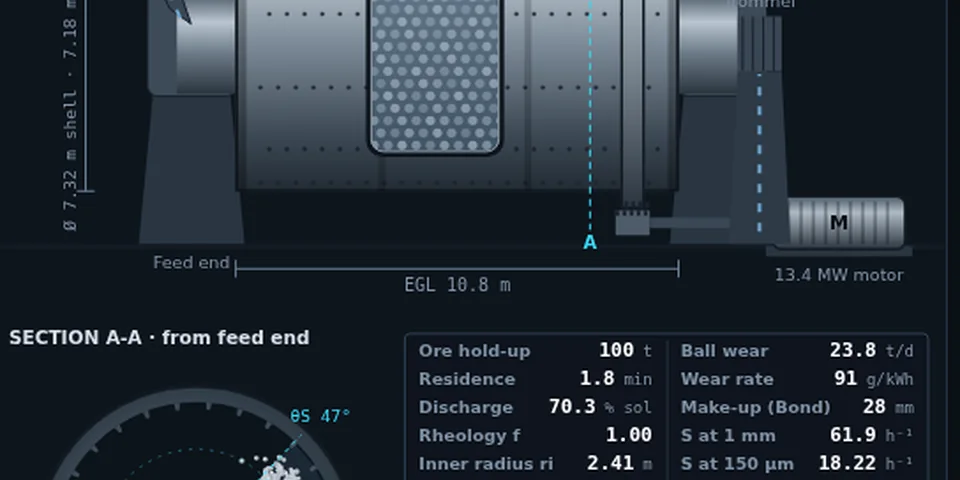 ML-301 · closed circuit
Ball Mill ML-301 — Closed-Circuit Grinding
A secondary ball mill in closed circuit with a hydrocyclone cluster on an operator HMI: Bond with Rowland efficiency factors, Austin population balance, Plitt cyclones and Morrell power, with sump-level, density and P80 control loops and the circulating load settling in real time.
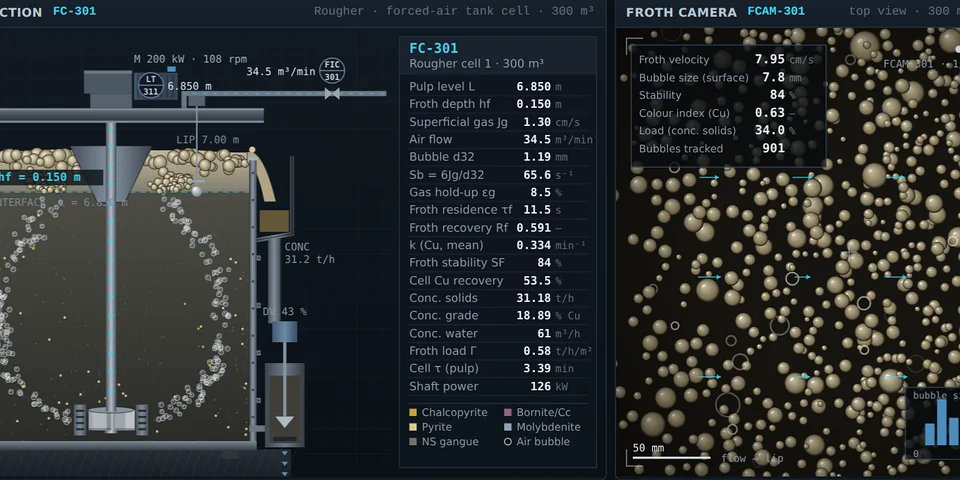 FL-300 · rougher to column
Copper Flotation Circuit — Rougher to Column Cleaner
Rougher, scavenger, regrind and column-cleaner flotation on an operator HMI: rate constants from bubble-surface-area flux and froth recovery, Savassi entrainment, cell-level PID loops and live grade–recovery curves.
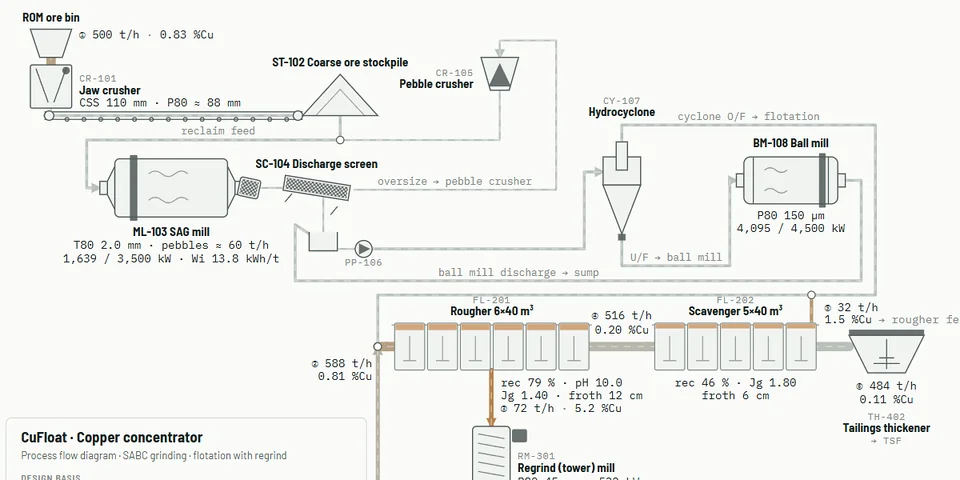 CuFloat · concentrator PFD
CuFloat Flotation Simulator
A copper flotation concentrator — rougher, scavenger, regrind and cleaner banks fed by SABC grinding — solved to steady state every second, with a plant-metallurgist AI tutor that runs on your own PC.
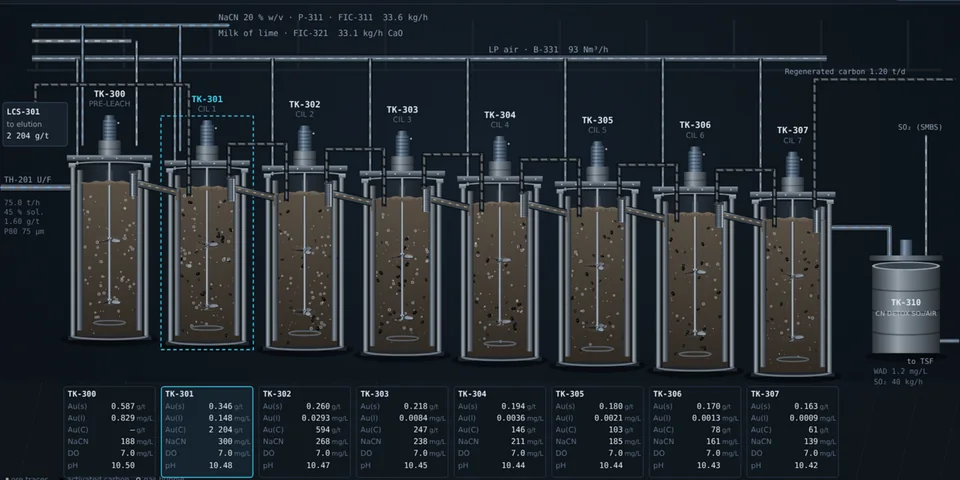 TK-300…307 · CIL train
CIL Leaching Plant — TK-300 to TK-307
An eight-tank carbon-in-leach train on a control-room HMI: Habashi and second-order leach kinetics, Fleming k–n carbon adsorption, cyanide, oxygen and pH control loops, and an HCN safety interlock.
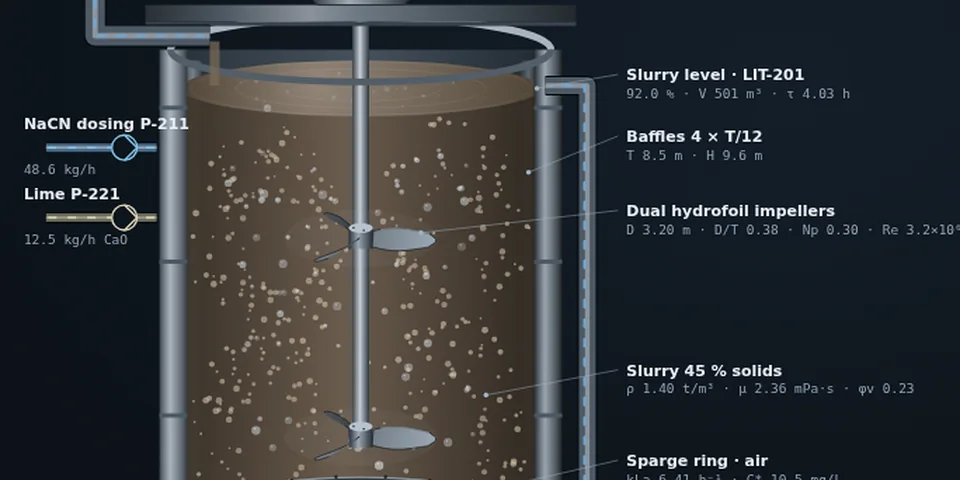 TK-201 · leach reactor
Leach Reactor TK-201 — Agitated Cyanide Leach
A single agitated leach reactor treated as a chemical reactor: Habashi mixed-control kinetics, oxygen mass transfer, Zwietering suspension and tanks-in-series residence time, with cyanide, pH and dissolved-oxygen loops and an HCN interlock.
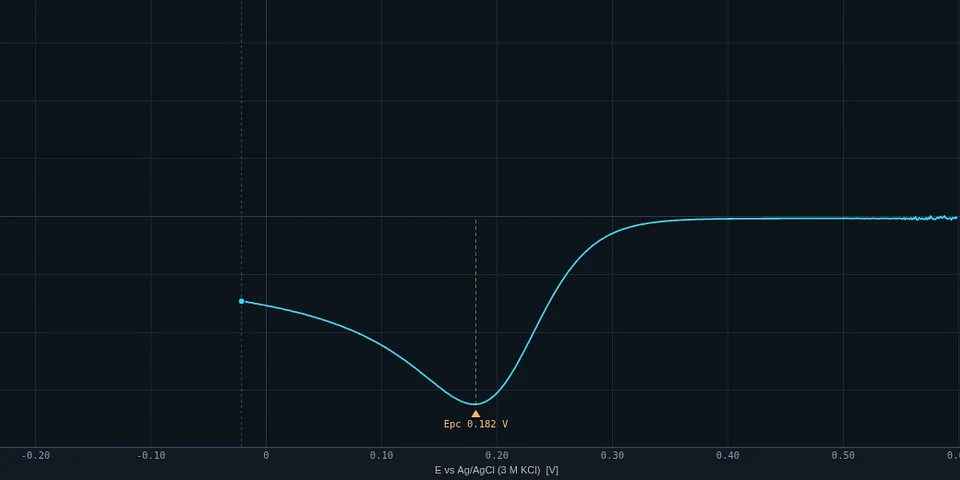 PGSTAT-401 · voltammogram
Electrochemical Workstation — Cyclic Voltammetry
A three-electrode potentiostat with the feel of commercial electrochemistry software: finite-difference diffusion with Butler–Volmer kinetics, iR drop, double-layer current and autoranging; CV, LSV, chronoamperometry, rotating-disk and Tafel scans with nine electrolyte presets.
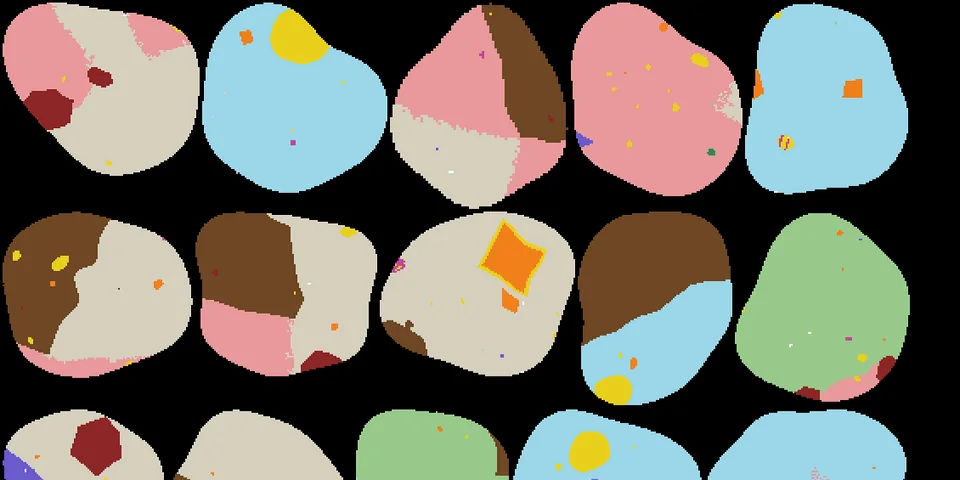 MLA Dataview · XBSE
MLA-SEM — Automated Mineralogy Workstation
A field-emission SEM with xT-style control software and an MLA measurement suite: BSE/SE imaging, EDS spectra, XBSE and GXMAP measurements, modal mineralogy, liberation and Dataview-style reports on porphyry copper ore.
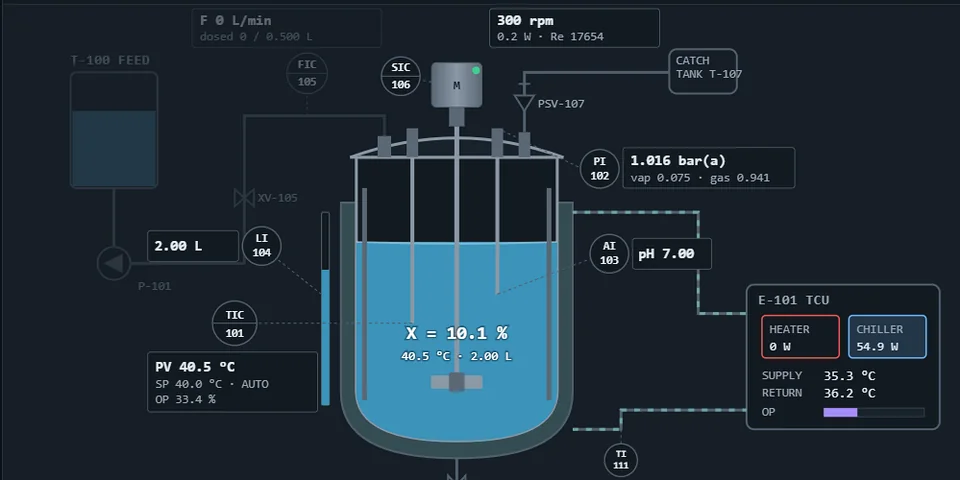 R-101 · jacketed reactor
BatchLab Pro — Batch Reactor Simulator
A jacketed, agitated batch reactor run from a control-room screen: mass, energy, jacket and pressure balances solved as it runs, a PID loop, an automatic charge-to-clean sequence, alarms with safety trips and injectable faults. Five reaction schemes including shrinking-core ore leaching, a thermal-safety study (MTSR, Stoessel class, Semenov), scale-up and a virtual laboratory with unknown samples.
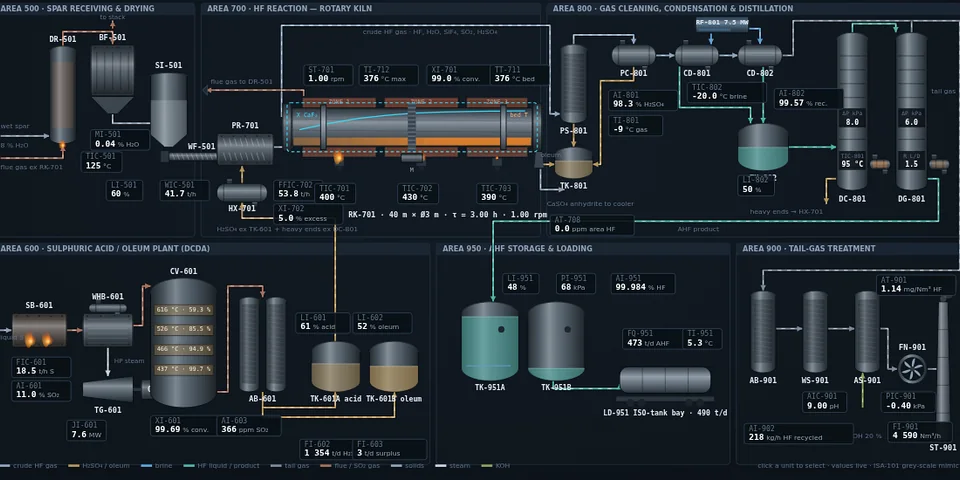 AHF plant · 29 units
AHF Plant — Bor-Öndör 1,000 t/d
The whole anhydrous-HF plant on one operator screen: spar drying, DCDA acid plant, three-zone rotary kiln solved along its 40 m bed, condensation and distillation, tail-gas scrubbing and product storage, with eight PID loops and a safety system that trips the kiln feed.
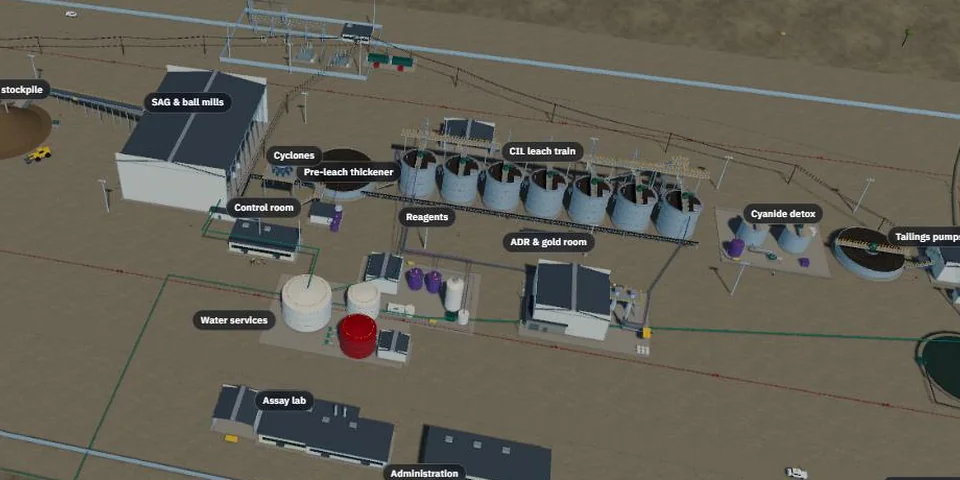 Gold CIL site · 3-D walkthrough
Gold CIL Plant — 3D Site Walkthrough
A whole gold operation as one place you can stand in: the open pit and waste dump, crushing and the conveyor line, the mill and cyclone cluster, seven CIL tanks, ADR and the gold room, the tailings line out to the TSF, the switchyard and the water mains. Take control of a worker and walk it on foot, or tick the buildings off to see what stands behind them.
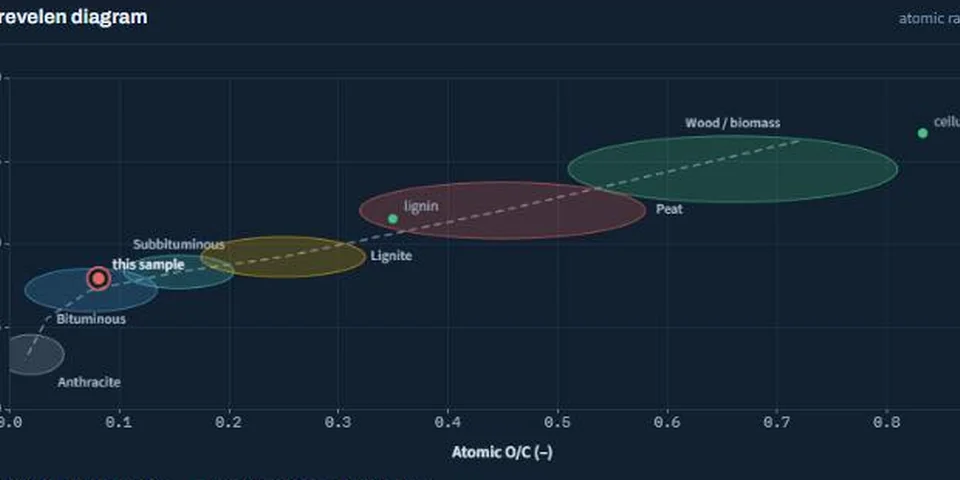 Van Krevelen · coal rank
Coal Analysis & Calorific Value
Proximate and ultimate analysis on every basis, gross and net calorific value, ASTM D388 rank and a live Van Krevelen plot — with Tavan Tolgoi- and Baganuur-type presets.
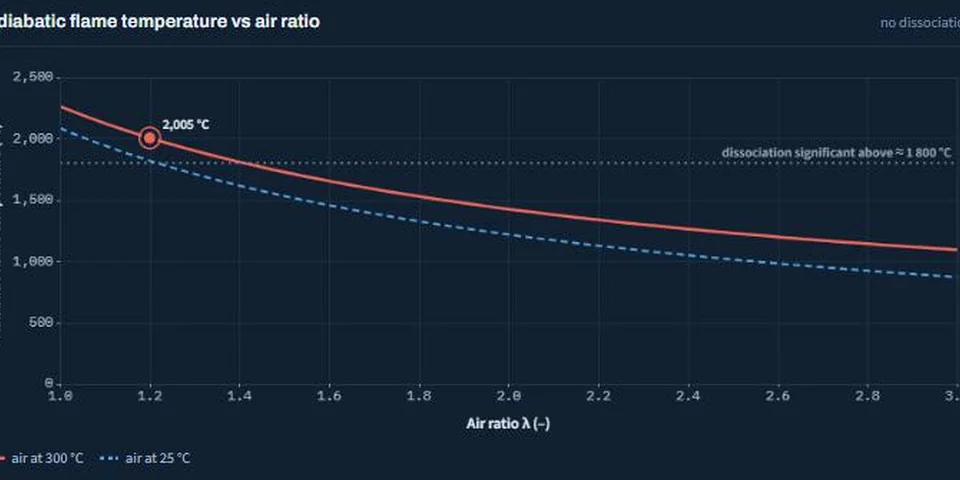 Flame temperature · λ sweep
Fuel Combustion & Flame Temperature
Air demand, wet and dry flue gas, water and acid dew points, adiabatic flame temperature and boiler efficiency for any solid, liquid or gaseous fuel.
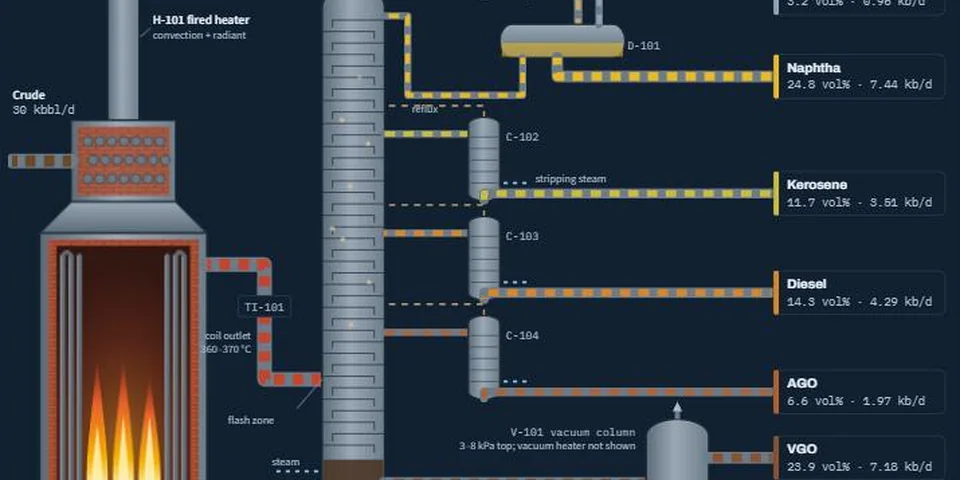 C-101 · crude column
Crude Distillation Cut Simulator
Five crudes with realistic TBP curves, including an indicative Tamsag-type waxy crude: move the cut points and watch the product yields and the column respond.
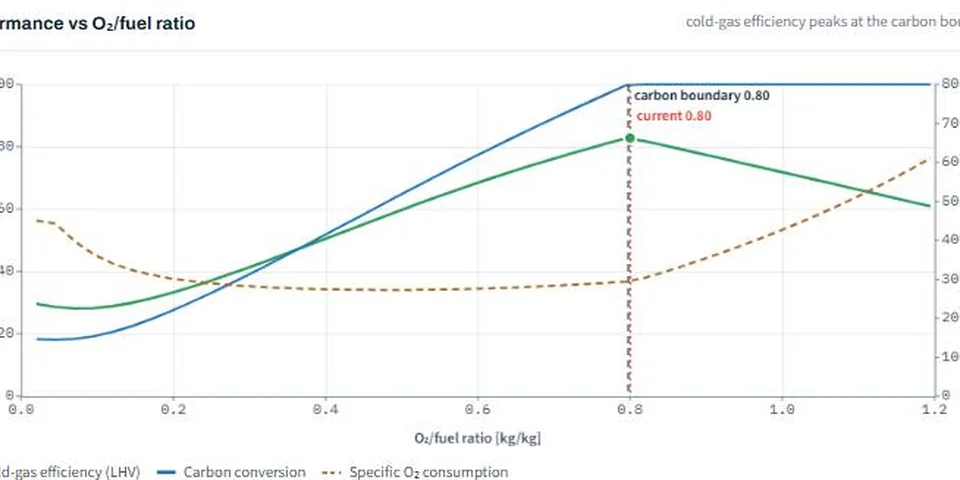 Gasifier · carbon boundary
Gasification Equilibrium
Gibbs minimisation for coal, lignite, petcoke or wood with O₂ or air and steam: syngas composition, cold-gas efficiency, adiabatic temperature and the carbon boundary.
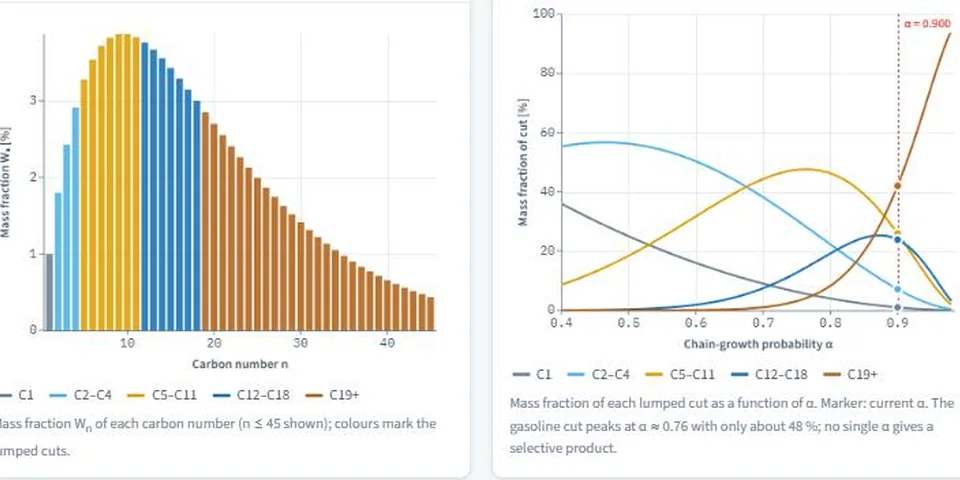 Fischer–Tropsch · ASF
Syngas Synthesis Explorer
Fischer–Tropsch ASF distribution, methanol equilibrium with Graaf constants and the shift duty to reach any H₂/CO ratio — three calculators in one.
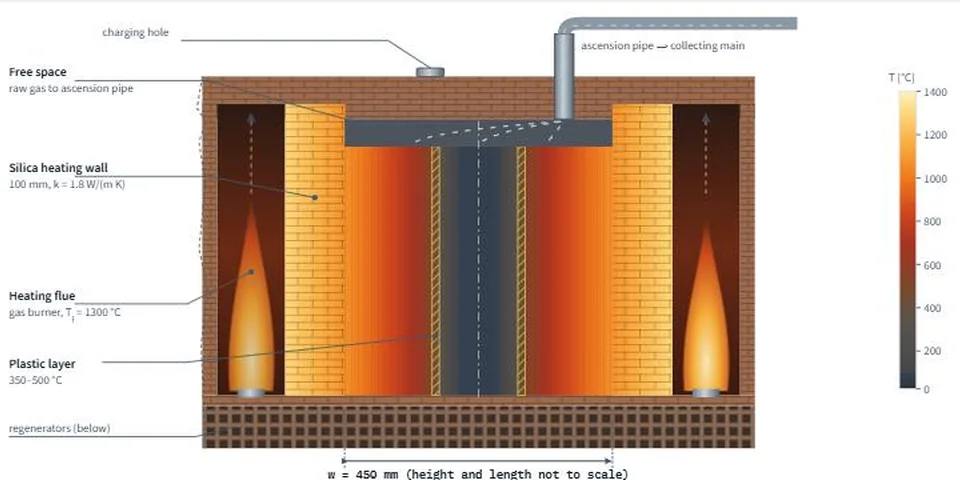 Coke oven · heating walls
Coke-Oven Battery
Transient heat conduction across the charge, plastic layers moving to the centre, coking time for any oven width, and coke, tar and gas yields.
More tools are on the way — see them all on the tools page.
Course information
How the course is run
Evaluation system
Course literature
- Free: Hydrometallurgy — Fundamentals and Applications, 2nd ed., Springer/TMS
- Habashi: A Textbook of Hydrometallurgy, 2nd ed.
- Schlesinger et al.: Extractive Metallurgy of Copper, 5th ed.
- Adams (ed.): Gold Ore Processing, 2nd ed.
- Marsden & House: The Chemistry of Gold Extraction, 2nd ed., SME
How to study with these lectures
- Click any underlined term — the definition opens in place (G for the full glossary)
- Tap the parts of every machine diagram — the labels are exam material
- Repeat each end-of-lecture quiz until you score full marks
- The 2026 Frontier chips are the presentation topics